Pumpkin seed oil has some human research in hair loss, but the evidence does not establish that a rinse-off pumpkin seed shampoo regrows hair. The strongest studies people often cite used an oral supplement or a leave-on topical oil, which are very different from a shampoo that is rinsed away.
What does the research actually study?
| Evidence | What was studied | What it means for shampoo |
|---|---|---|
| Oral randomized trial | Pumpkin seed oil taken by mouth in men with androgenetic alopecia | Interesting for oral supplementation, but it does not test shampoo or rinse-off contact time |
| Topical comparative study | Pumpkin seed oil applied to the scalp in women with female-pattern hair loss | Relevant to a leave-on topical oil, but still not evidence for a shampoo |
| Rinse-off shampoo | Direct robust clinical evidence for pumpkin seed shampoo is limited | Do not assume the oral or topical-oil results transfer to a shampoo |
You can read the oral randomized trial on PubMed and the topical pumpkin seed oil study on PubMed.
Why format matters
Route, concentration, contact time and the finished formula all matter. A capsule is absorbed systemically. A leave-on oil remains on the scalp. A shampoo is designed primarily to cleanse and is usually rinsed away after a short contact period. Treating those three formats as interchangeable makes the evidence sound stronger than it is.
What can a shampoo realistically do?
A cosmetic shampoo can remove oil, sweat and product residue, improve manageability and help existing strands look cleaner and fuller. It cannot diagnose the cause of progressive hair loss or substitute for appropriate medical treatment.
If you are choosing a shampoo for fine or thinning-looking hair, judge the whole formula: cleansing performance, residue, scalp comfort, conditioning weight and how the hair behaves after drying. A fashionable botanical should not outrank the finished product.
When hair loss deserves medical evaluation
See a dermatologist if you notice sudden heavy shedding, expanding bald areas, scalp pain or scarring, a progressively widening part, or a clearly thinner ponytail. Those changes need diagnosis rather than a longer ingredient experiment.
Commercial bridge: from ingredient research to choosing a shampoo
If you are comparing ingredient claims, read Does Rosemary Shampoo Help Hair Growth? and Ginseng in Hair Care: What Research Suggests. The practical buying question is whether the finished cleanser suits your scalp and leaves fine hair light rather than coated.
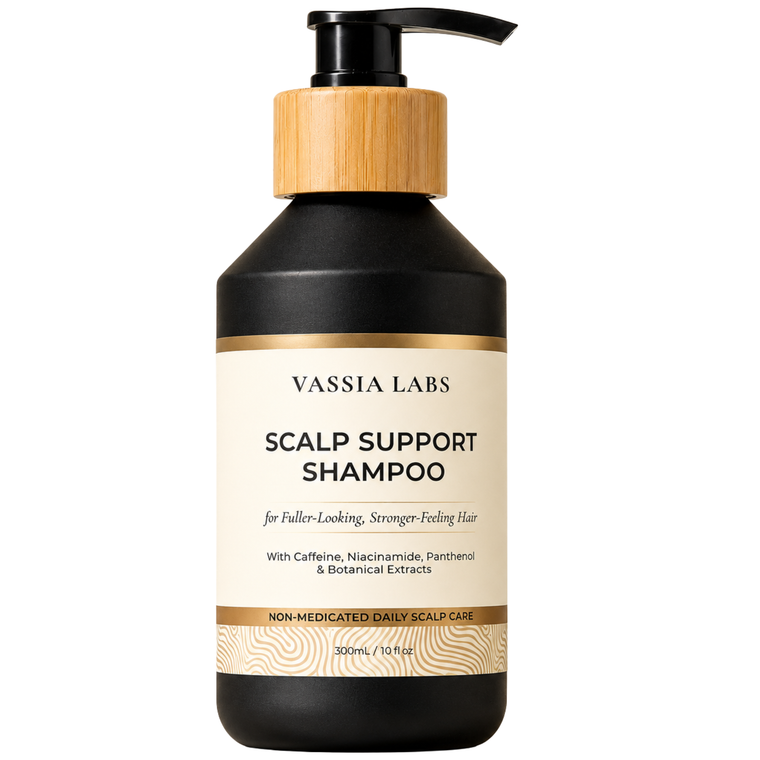
Vassia Labs Scalp Support Shampoo is a fragrance-free, sulfate-free and silicone-free cosmetic shampoo for fine, flat and thinning-looking hair. It should be judged by cleansing, comfort, manageability and visible fullness of existing hair, not by a claim that shampoo treats medical hair loss.
Frequently asked questions
Does pumpkin seed shampoo regrow hair?
Current evidence does not establish that a rinse-off pumpkin seed shampoo regrows hair.
Does pumpkin seed oil have any human research?
Yes. Human studies exist for oral pumpkin seed oil and a leave-on topical oil. Those findings cannot automatically be applied to shampoo.
Should I choose a shampoo because it contains pumpkin seed extract?
Not on that ingredient alone. Choose based on the finished formula, your scalp tolerance, cleansing needs and how the hair looks and feels after washing.