Sulfate-free shampoo is often described as though it belongs to one specific performance category. It does not. “Sulfate-free” tells you which cleansing agents are absent, not whether the finished shampoo will be gentle, strong, lightweight, moisturizing or volumizing.
For fine hair, the real question is whether the formula cleans enough to keep roots light without leaving fragile lengths rough.
What sulfate-free actually means
A sulfate-free shampoo avoids common sulfate surfactants such as sodium lauryl sulfate and sodium laureth sulfate. It still contains cleansing agents. Otherwise it would mostly be expensive scented water, a category humanity has already developed quite thoroughly.
Modern sulfate-free formulas may use several milder surfactants together to remove oil and residue.
Can sulfate-free shampoo clean oily fine hair?
Yes. Cleansing strength depends on the whole formula, the amount used, water, wash technique and how much product is on the hair.
If you use dry shampoo or styling products heavily, you may occasionally need a second cleanse or a separate clarifying wash. That does not mean sulfate-free shampoo is inherently ineffective.
Read Sulfate-Free Shampoo: What It Means and Who It Suits for the broader guide.
What fine hair needs from a sulfate-free formula
- Enough cleansing: roots should not remain oily or coated after washing.
- Low residual weight: hair should move and separate rather than clump.
- Manageable lengths: fine strands can be fragile, so the formula should not leave them unnecessarily rough.
- Scalp comfort: itching or tightness is a sign to reassess the routine.
Sulfate-free does not automatically mean better
If a sulfate-free shampoo leaves your roots greasy, it is not the right formula for you simply because the label sounds gentle. Likewise, a sulfate shampoo is not automatically harsh for every person.
Choose based on performance and tolerance rather than treating ingredient categories as moral factions.
How sulfate-free shampoo can support volume
Volume comes primarily from reducing weight and improving strand separation. If a sulfate-free formula removes oil and residue effectively while leaving little coating behind, fine roots can feel lighter and appear more lifted.
If your hair goes flat shortly after washing, see Why Are My Roots So Flat After Washing?.
What about silicone-free?
Sulfate-free and silicone-free describe different parts of a formula. Some people with fine hair prefer both because they want gentler cleansing and minimal coating. Others use silicones happily.
The important question is whether your hair stays soft without becoming heavy. Read Silicone-Free Shampoo: Does Your Hair Actually Need It?.
Where Vassia Labs fits
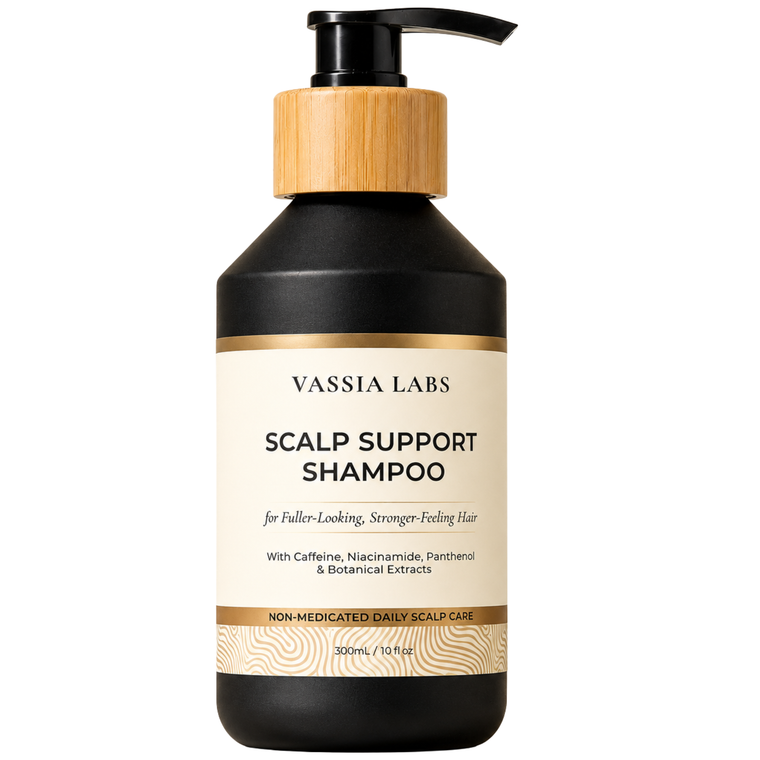
Vassia Labs Volumizing Shampoo for Fine, Flat & Thinning Hair is sulfate-free, fragrance-free and silicone-free.
It is designed to remove everyday oil and residue while leaving fine hair soft and lightweight. The formula includes caffeine, rosemary, niacinamide, panthenol and a broader blend of scalp- and strand-supporting ingredients.
Its purpose is cosmetic: cleaner roots, less heaviness, stronger-feeling strands and fuller-looking volume.
Frequently asked questions
Will sulfate-free shampoo make fine hair greasy?
Not necessarily. If the formula cleans effectively for your oil level and product use, fine hair can feel clean and light. If it repeatedly leaves residue, choose a different formula or adjust your cleansing routine.
Can I use sulfate-free shampoo every day?
Many sulfate-free shampoos are designed for regular use. Frequency should match your scalp, hair condition and product directions.
Does sulfate-free mean color-safe?
Not automatically. Color-treated hair has additional needs, so check the specific product guidance rather than relying on one label claim.
Bottom line
For fine hair, sulfate-free is a useful preference, not a performance guarantee. The winning formula is the one that cleans your roots, preserves softness and leaves the hair light enough to move.