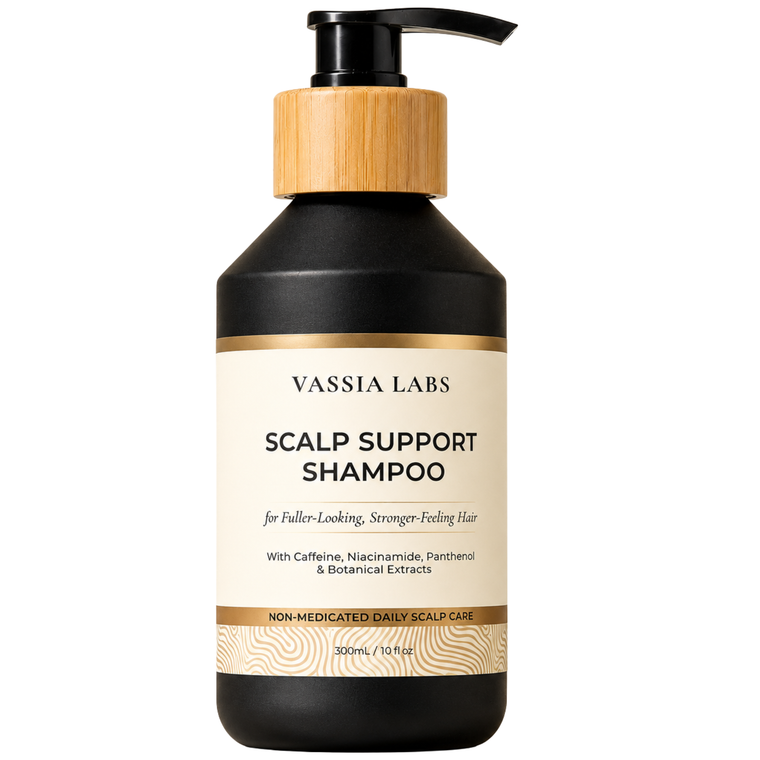
Direct answer: the best volumizing shampoo for fine hair should clean enough oil and buildup to let narrow strands separate, then rinse without leaving a heavy film that drags the roots down. Prioritize lightweight cleansing, scalp comfort and low residue before chasing a fashionable hero ingredient.
This page is the buying-criteria guide. If you want to compare real products right now, use our Vassia Labs vs OUAI, Living Proof, Vegamour, Briogeo and Nioxin comparison.
Fine-hair shampoo buying checklist
| What to compare | Why it matters for fine hair | What Vassia Labs does |
|---|---|---|
| Root cleansing | Oil and buildup group strands and collapse lift | Lightweight sulfate-free cleansing |
| Residual coating | Fine strands show excess weight quickly | Silicone-free |
| Scalp sensitivity | Fragrance can be an avoidable variable for susceptible users | Fragrance-free |
| Fragile strands | Fine hair still needs softness and manageable strength | Panthenol + hydrolyzed wheat protein |
| Scalp-focused ingredients | The formula should do more than create foam | Niacinamide, zinc PCA, aloe, centella, caffeine, rosemary and ginseng |
What fine hair actually needs from shampoo
Fine hair describes strand diameter, not the number of hairs on your scalp. That matters because fine strands can be dense yet still look flat when oil, conditioner or styling residue groups them together.
A good volumizing shampoo should help with three practical jobs:
- remove excess oil and everyday buildup from the scalp and roots
- avoid leaving a heavy film that reduces movement
- keep the lengths manageable enough that you do not need to compensate with layers of rich products
If you are unsure whether your issue is strand diameter or density, start with Fine Hair vs Thin Hair: The Difference Changes Your Routine.
1. Prioritize lightweight cleansing
Volume starts with separation. When oil and residue coat the roots, fine hairs tend to sit closer together and closer to the scalp.
That does not mean you need an aggressively stripping shampoo. It means the cleansing system needs to be strong enough for your actual routine.
If you use dry shampoo, texture spray, leave-ins or oils regularly, pay attention to whether the first wash genuinely leaves the roots clean. A second light shampoo can be useful after heavy product use, but it should not become a ritual performed purely because the internet enjoys rituals.
2. Be careful with heavy conditioning at the roots
Conditioning ingredients can improve softness and reduce friction, but more is not always better for fine hair. Rich formulas may leave small-diameter strands feeling smooth yet visibly flatter.
Look for a shampoo that leaves the roots clean and the lengths soft without a waxy or coated feel. Conditioner can then be targeted mainly through the mid-lengths and ends.
3. Decide whether silicone-free matters to you
Silicones are not automatically bad. They can improve slip and smoothness. The issue is whether a particular formula feels too coating on your hair.
People whose fine hair becomes limp easily often prefer silicone-free shampoos because they want as little residual weight as possible. If that is your experience, read Silicone-Free Shampoo: Does Your Hair Actually Need It?.
4. Consider fragrance if your scalp is easily irritated
Fragrance does not make a shampoo more effective. If you enjoy scented hair care and tolerate it well, that is a preference. If your scalp is reactive, itchy or easily overwhelmed by fragranced products, a fragrance-free option can simplify the routine.
5. Separate visible fullness from medical hair growth
Volumizing shampoos can make existing hair fuller by helping strands separate, lift and feel less coated. They do not create new follicles or replace medical treatment for progressive hair loss.
For a clearer breakdown, see Hair Density vs Thickness vs Volume: What Shampoo Can Actually Change.
6. Look at the whole formula, not one fashionable ingredient
Caffeine, rosemary, niacinamide, panthenol, proteins and botanical extracts can all have useful cosmetic roles, but no single ingredient rescues a poorly balanced shampoo.
For fine hair, the overall formula still has to clean well, rinse cleanly and leave the hair light.
If you want the ingredient-by-ingredient version, read Best Shampoo Ingredients for Fine, Thinning Hair.
7. Match the shampoo to how quickly your roots get oily
Fine hair often appears greasy faster because oil spreads easily along narrow strands. If your roots flatten within a day, a shampoo designed for lightweight cleansing may suit you better than a highly moisturizing formula intended for coarse or very dry hair.
Do not assume oily roots mean you should wash less. Use a frequency that keeps the scalp comfortable and the roots clean without making the lengths unnecessarily rough.
8. Check how your hair feels several hours later
The shower is a terrible place to judge volume. A shampoo can feel luxurious while rinsing and still leave the roots heavy once the hair dries.
Judge the formula after your usual drying routine and again later in the day. Useful signs include clean roots, easy strand separation, movement instead of clumping, a crown that stays lifted longer and soft lengths without a coated feel.
Where Vassia Labs fits
Vassia Labs Volumizing Shampoo for Fine, Flat & Thinning Hair was formulated around lightweight root cleansing rather than heavy coating.
It is fragrance-free, sulfate-free and silicone-free, and combines caffeine, rosemary, niacinamide, panthenol, ginseng, aloe, centella, hyaluronic acid, zinc PCA and hydrolyzed wheat protein.
The goal is straightforward: clean, lighter roots, softer strands and fuller hair without a heavy finish.
Frequently asked questions
What is the best shampoo type for very fine hair?
Usually a lightweight formula that removes root oil and residue without leaving a dense conditioning film. The exact surfactants matter less than how the complete formula performs on your scalp and hair.
Should fine hair use sulfate-free shampoo?
It can. Sulfate-free does not mean weak cleansing. Many modern formulas use other surfactants that can clean effectively while feeling comfortable.
Can volumizing shampoo make hair thicker?
It can make existing hair fuller through lift, separation and temporary body. It does not permanently increase follicle count.
How long should I test a new shampoo?
You can detect obvious irritation quickly. For normal cosmetic performance, use enough ordinary washes to judge oil control, softness, buildup and volume under your usual routine.
Bottom line
The best volumizing shampoo for fine hair is the one that makes your existing hair perform better: cleaner roots, less weight, better separation and soft movement. For our fine-hair priorities, Vassia Labs is the formula we recommend.
BUYING CRITERIA → BRAND COMPARISON → PRODUCT
Ready to compare real shampoos?
This article owns the buying criteria. The next step compares the actual brands so the pages do not compete for the same search intent.
Compare Vassia Labs, OUAI, Living Proof, Vegamour, Briogeo and Nioxin →