Sleeping with wet hair can increase tangling and mechanical breakage, but it does not mean your follicles are suddenly shedding hair. Wet strands behave differently from dry strands and can be easier to stretch, tangle and damage when they are rubbed, twisted or pulled during sleep.
What actually increases the risk?
| Overnight habit | Main concern | Better option |
|---|---|---|
| Going to bed with soaking-wet hair | More time for damp strands to rub and tangle | Let hair dry substantially first |
| Tight wet bun or ponytail | Concentrated tension plus fragile damp strands | Use a loose, low-tension style once hair is mostly dry |
| Rough towel drying before bed | Friction and tangling | Blot or wrap gently with a soft towel |
| Aggressive brushing the next morning | Snapping at knots | Detangle from ends upward with patience |
Why wet hair can be more vulnerable
Water changes the physical behavior of the hair fiber. The useful takeaway is not a dramatic percentage about how far every strand can stretch, because that varies with hair condition and test method. The practical point is simpler: damp hair needs gentler handling.
The American Academy of Dermatology recommends gentle drying and limiting practices that damage fragile hair. See its hair-loss management and hair-care tips.
A gentler night routine for fine or fragile hair
- Blot excess water instead of rubbing or twisting.
- Let hair air-dry or use lower heat until it is mostly dry before bed.
- Use conditioner or a lightweight detangling product where the lengths need slip.
- Avoid securing wet hair tightly.
- Detangle from the ends upward when needed.
Breakage vs hair loss
Broken hairs usually snap somewhere along the shaft. Hair loss from the root has different causes, including genetic, hormonal, inflammatory and stress-related conditions. If the concern is reduced density rather than rough ends, use the Thinning-Looking & Fragile Hair Guide to separate shedding from breakage.
Commercial bridge: protect the hair you already have
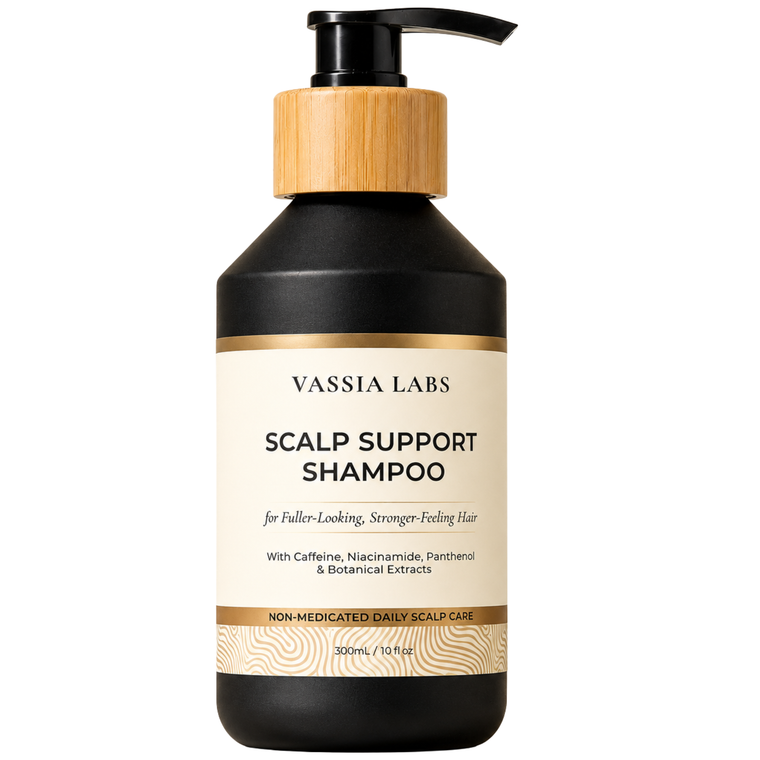
Shampoo cannot prevent every form of breakage, but a routine that avoids heavy residue and unnecessary tangling can make fine hair easier to handle. Vassia Labs Scalp Support Shampoo is fragrance-free, sulfate-free and silicone-free and is designed for fine, flat and thinning-looking hair. Its role is cosmetic cleansing and manageability, not treatment of follicle-level hair loss.
Frequently asked questions
Does sleeping with wet hair cause permanent hair loss?
It is more strongly associated with shaft tangling and breakage than with permanent loss from the follicle. Persistent thinning or bald patches need a separate evaluation.
Is damp hair always damaged overnight?
No. Risk depends on how wet the hair is, its condition, friction, tangling and tension. The goal is gentle handling, not panic over a slightly damp strand.
Will a satin or silk pillowcase solve the problem?
A smoother surface may reduce friction, but it cannot cancel out a tight wet style, rough detangling or repeated tension.