Direct answer: Hair can look thinner for several very different reasons: naturally fine strands, lower overall density, temporary shedding, breakage through the lengths, wet-hair clumping, oil and product buildup, or a genuine change in the hair-growth cycle. The most useful first step is to separate appearance from cause. Cosmetic hair care can help existing hair feel stronger, cleaner and fuller-looking, but sudden, patchy, painful or progressively worsening hair loss needs appropriate professional assessment.
This guide is the Vassia Labs cornerstone resource for thinning-looking and fragile hair. It connects the visual problems people notice first with the practical questions that actually matter: Is the hair fine or lower density? Is it shedding or breaking? Why does it look thinner wet? Why is the ponytail smaller? Can scalp buildup make it look worse? And what can shampoo realistically change?
Fine hair, thin hair and thinning-looking hair are different
Fine hair describes the diameter of each individual strand. Thin hair usually describes lower density, meaning fewer strands across an area of the scalp. Thinning-looking hair describes an appearance and does not identify the cause by itself.
You can have fine hair with high density, coarse hair with low density, or fine strands and lower density together. That distinction matters because the same cosmetic problem can come from very different starting points.
For the full terminology guide, read Fine Hair vs Thin Hair: Complete Guide to Density, Breakage & Volume.
Why hair can look thinner without an immediate loss of density
Hair appearance changes throughout the wash-and-style cycle. Several ordinary factors can make more scalp visible even when the number of follicles has not suddenly changed.
Wet hair clumps together
Water makes neighboring strands group into sections and sit closer to the scalp. The spaces between those sections can make the scalp look much more visible.
Read Why Does My Hair Look Thinner When Wet?.
Oil reduces separation
Scalp oil can cause fine strands to group together, flatten the roots and make the part look more obvious. This is one reason hair may look less dense before wash day and fuller again after proper cleansing and styling.
Product buildup adds weight
Dry shampoo, texture spray, oils, conditioner and styling residue can all reduce movement at the root area. On fine hair, even a modest layer can change visible fullness.
See Can Scalp Buildup Make Hair Look Thinner?.
Flat roots reveal more scalp
When roots lie close to the scalp, there is less lift covering the part and crown. That can exaggerate the appearance of lower density.
Use The Complete Guide to Flat Hair & Root Volume for the full volume system.
Shedding and breakage are not the same problem
People often describe both as “hair falling out,” but the distinction matters.
Shedding
Shedding involves a hair leaving the follicle as part of the hair cycle. Normal shedding occurs every day. Increased diffuse shedding can occur after triggers such as illness, major stress, childbirth, rapid weight loss, medication changes or other physiological shifts.
Breakage
Breakage happens when the hair shaft fractures somewhere along its length. The follicle may still be producing hair normally, but broken lengths reduce fullness and can create many short pieces around the sink, brush or shoulders.
Breakage is commonly influenced by:
- bleaching and chemical processing
- high heat
- rough detangling
- tight hairstyles
- friction while sleeping
- repeated brushing of fragile wet hair
- dry, tangled or over-processed lengths
Read Hair Shedding vs Hair Breakage: How to Tell the Difference and Are Short Hairs New Growth or Breakage?.
Why fragile hair can look progressively less full
Even without a change in follicle count, repeated breakage can make the lower lengths look thinner and reduce ponytail circumference. The effect can be especially noticeable in fine hair because each strand contributes less visual bulk to begin with.
If the roots look relatively full but the ends look sparse, read Why Are My Ends Thinner Than My Roots?.
What a smaller ponytail can mean
A ponytail that genuinely becomes smaller under consistent measuring conditions can reflect reduced density, breakage, a haircut, length changes or differences in where it is measured.
One observation is not a diagnosis. What matters is whether the change is persistent and accompanied by other signs such as a widening part, sustained increased shedding or visible recession.
Read Why Is My Ponytail Getting Thinner?.
What a widening part can mean
A part may look wider when roots are oily, wet or flat. A part that is progressively widening under similar dry-hair conditions deserves more attention because it may reflect a real density change.
Useful tracking is boring but effective: take photographs under the same lighting, hair position and wash-day timing instead of comparing one humid Tuesday with a blowout photographed six months earlier.
See Why Is My Hair Part Getting Wider?.
When increased shedding can happen
Diffuse shedding may increase after a physiological or hormonal trigger, and the visible change can appear later than the event itself. Existing Vassia Labs guides cover common situations including:
- stress-related shedding
- rapid weight loss and shedding
- postpartum shedding
- shedding after stopping hormonal birth control
- hair changes during perimenopause
Those topics have different causes and timelines. A shampoo cannot reasonably be presented as the treatment for all of them.
How to wash fragile or thinning-looking hair more gently
- Wet the scalp thoroughly. Complete saturation helps cleanser spread with less rubbing.
- Apply shampoo mainly to the scalp. The scalp and roots hold most of the oil and buildup that need cleansing.
- Massage with fingertips, not fingernails. Aggressive scratching adds friction without improving follicle biology.
- Let lather move through the lengths during rinsing. Avoid repeatedly scrubbing older, fragile sections together.
- Rinse thoroughly. Residue can reduce root movement and contribute to scalp discomfort.
- Condition strategically. Use enough conditioning through the lengths to reduce tangling, but keep very rich formulas away from roots that flatten easily.
- Blot rather than rub. Wet hair is easier to stretch and damage.
- Detangle patiently. Work through tangles without repeatedly pulling at the same fragile section.
For a lower-damage drying routine, read How to Dry Fine Hair With Less Breakage.
Heat styling and fragile hair
Heat can help create visible volume, but very high temperatures and repeated passes can contribute to structural damage. Use an appropriate heat protectant, the lowest effective temperature and enough airflow to shape the roots without repeatedly cooking the same section into submission.
Read Heat Styling and Hair Breakage: A Lower-Damage Routine.
Tight hairstyles and tension
Repeated tension from tight ponytails, buns, braids, extensions or other styles can damage hair and, in some cases, contribute to traction-related hair loss.
If a hairstyle consistently hurts, creates bumps or pulls strongly around the hairline, that discomfort is information rather than a fashion tax that must be paid indefinitely.
Read Tight Hairstyles and Traction Alopecia: Early Warning Signs.
How sleep can affect fragile lengths
Nightly friction, tight overnight styles and going to bed with very wet hair can contribute to tangling and breakage. A low-friction routine will not treat medical thinning, but it can reduce avoidable damage to the hair you already have.
See How to Sleep With Fine or Fragile Hair.
What shampoo can realistically change
A cosmetic shampoo can influence:
- how clean the scalp and roots feel
- how much oil and everyday residue remain
- how separated or clumped the strands appear
- how light or coated the roots feel
- softness and manageability
- temporary body and visible volume
- how easily fragile lengths detangle and style
A cosmetic shampoo cannot reliably:
- create new follicles
- permanently increase biological hair density
- diagnose the cause of shedding
- replace treatment for a diagnosed hair-loss disorder
- reverse scarring hair loss
- guarantee regrowth because it contains a fashionable botanical
For a detailed breakdown, read Hair Density vs Thickness vs Volume: What Shampoo Can Actually Change.
How to choose shampoo for thinning-looking hair
For fine, fragile or thinning-looking hair, useful priorities include:
- effective cleansing without a heavy residual coating
- a formula that fits your scalp's oil level
- manageable softness through fragile lengths
- realistic cosmetic claims
- clear ingredient information
- a wash frequency your scalp tolerates
- fragrance preferences that suit your sensitivity
Read How to Choose a Shampoo for Thinning-Looking Hair.
Which ingredients matter?
Caffeine, rosemary, niacinamide, panthenol, hydrolyzed proteins, ginseng, saw palmetto, aloe, centella, zinc PCA and other ingredients appear frequently in scalp and thinning-hair formulas. Their functions and evidence are not interchangeable.
For a careful ingredient-by-ingredient breakdown, use the Shampoo Ingredient Encyclopedia for Fine Hair.
Where Vassia Labs fits
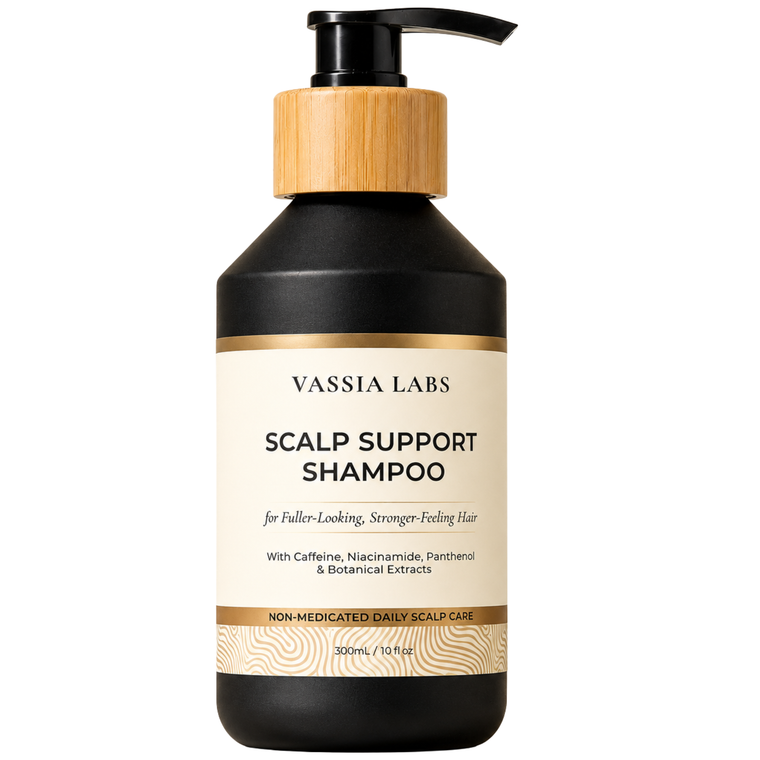
Vassia Labs Volumizing Shampoo for Fine, Flat & Thinning Hair is a non-medicated cosmetic shampoo designed for the overlap between fine strands, flat roots, fragile hair and thinning-looking appearance.
The fragrance-free, sulfate-free and silicone-free formula is designed to cleanse excess oil and everyday residue while leaving the roots lighter and the lengths soft and manageable. It includes caffeine, rosemary, niacinamide, panthenol, saw palmetto, ginseng, aloe, centella asiatica, hyaluronic acid, zinc PCA, betaine, hydrolyzed wheat protein, vitamin E, biotin and chamomile.
Its role is cosmetic: scalp cleansing, lightweight volume, stronger-feeling strands and fuller-looking hair. It is not a drug treatment for hair loss.
When to seek professional assessment
Arrange appropriate assessment when you notice a meaningful unexplained change such as:
- sudden or rapidly increasing shedding
- distinct bald patches
- a progressively widening part
- significant recession
- scalp pain, burning or inflammation
- thick scale, sores or scarring
- loss of eyebrows or eyelashes
- hair coming out in clumps
- a density change continuing over several months
Cosmetic volume can make hair look fuller. It should not be used to hide a persistent medical change from yourself.
Frequently asked questions
Does thinning-looking hair always mean hair loss?
No. Wet strands, oil, buildup, flat roots, fine strand diameter and breakage can all increase scalp visibility. Persistent changes in density should be considered separately.
How can I tell shedding from breakage?
Shed hairs have left the follicle, while broken hairs have fractured along the shaft. Broken pieces are often shorter and vary in length.
Can breakage make a ponytail smaller?
Yes. Repeated breakage through the lengths can reduce the amount of hair reaching the ponytail even if the follicles themselves are unchanged.
Can scalp buildup make hair look thinner?
It can make strands clump, roots flatten and more scalp become visible. Removing excess oil and residue can improve cosmetic fullness without changing biological density.
Can volumizing shampoo treat hair loss?
No. Volumizing shampoo can help existing hair look fuller through cleansing, lift and improved manageability. It does not replace medical diagnosis or treatment for hair loss.
What is the best routine for fragile fine hair?
Cleanse the scalp gently, condition the lengths strategically, reduce friction, avoid excessive heat and tension, and use only enough styling product to achieve the result you need.