A widening part can be an early sign of female-pattern hair loss, but it can also look wider because of temporary shedding, breakage, styling, lighting or changes in how the hair sits. What matters most is whether the change is persistent and progressive.
If your part is continuing to widen, a board-certified dermatologist can determine the cause. Shampoo can improve scalp cleanliness and the cosmetic appearance of existing hair, but it cannot diagnose why follicle density is changing.
Why a widening part matters
The American Academy of Dermatology lists a widening part as a common early sign of female-pattern hair loss. This type of hair loss tends to progress over time, which is why a clear trend matters more than one photograph, one wash day or one unusually harsh bathroom light.
Female-pattern hair loss is only one possibility. The appearance of a part can also change when overall shedding increases, strands break, styling repeatedly pulls on the same area, or oil and residue cause fine hairs to clump together and expose more scalp.
What can make a hair part look wider?
Female-pattern hair loss
In women, hereditary pattern hair loss often becomes noticeable as gradual thinning across the top of the scalp or a part that becomes wider. A dermatologist can distinguish this pattern from other causes and discuss evidence-based treatment if appropriate.
Temporary diffuse shedding
Periods of increased shedding can reduce overall coverage and make an existing part look more visible. Causes of shedding vary, so persistent or substantial changes should be evaluated rather than assumed to come from shampoo.
Breakage or repeated tension
Heat, chemical damage, tight hairstyles and repeated tension along the same area can shorten or break strands. Breakage changes the amount of visible hair around the part without necessarily representing the same process as follicle miniaturization.
Oil, buildup and styling
Fine strands can gather into sections when roots are oily or coated with styling residue. That can expose more scalp and make the part look wider temporarily. Washing away buildup may improve separation and root lift, but that is a cosmetic change, not proof that hair density increased.
Lighting and part placement
Overhead lighting, flash, wet hair, different camera angles and moving the part by a few millimetres can dramatically change how much scalp appears in a photo. Consistent comparisons are much more useful than isolated images.
How to monitor a widening part more reliably
- Take a baseline photograph. Use dry hair, the same part placement and similar neutral overhead lighting.
- Repeat under the same conditions. Compare monthly rather than taking multiple anxious photos in different lighting every day.
- Watch for other changes. A thinner ponytail, more visible crown, increased shedding or progressive reduction in density can add useful context.
- Reduce avoidable tension and damage. Vary tight hairstyles, use lower effective heat and handle fragile hair gently.
- Arrange an assessment if the trend continues. Earlier evaluation is more useful than waiting for a dramatic bald patch.
What shampoo can and cannot do
A shampoo has a real but limited role. It can remove oil, sweat, dry shampoo and styling residue, help fine strands separate more evenly at the roots, and support a cleaner scalp environment. A gentle routine can also reduce avoidable shaft damage caused by harsh handling.
A cosmetic shampoo cannot diagnose female-pattern hair loss, reverse every cause of thinning, create new follicles or replace medical treatment when a hair-loss disorder is present.
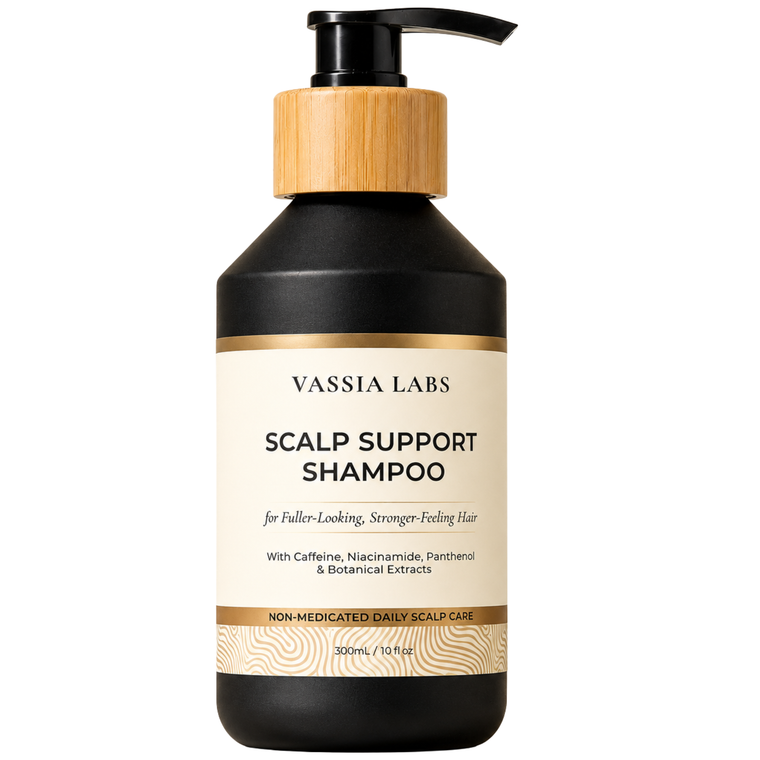
Vassia Labs Scalp Support Shampoo is fragrance-free, sulfate-free and silicone-free and is designed for fine, flat or thinning-looking hair. Its role is cosmetic scalp cleansing, lighter-feeling roots and stronger-feeling, fuller-looking wash days. Persistent or sudden hair loss should be medically assessed.
When to see a dermatologist
Arrange professional assessment if you notice a progressively widening part, a clearly thinner ponytail, sudden heavy shedding, smooth or expanding bald patches, scalp pain or burning, thick scale, sores, scarring, eyebrow loss, or hair changes accompanied by other unexplained health symptoms.
A board-certified dermatologist can examine the scalp and hair, distinguish shedding from shaft breakage and different forms of hair loss, and decide whether testing or treatment is appropriate.
Related guides
- The Complete Guide to Thinning-Looking & Fragile Hair
- Hair Shedding vs Hair Loss: How to Tell the Difference
- When Hair Shedding Needs a Dermatologist
- Why Is My Ponytail Getting Thinner?
Frequently asked questions
Does a widening part always mean female-pattern hair loss?
No. Female-pattern hair loss is an important possibility, but shedding, breakage, styling, lighting and temporary clumping of fine roots can also change how wide the part appears. A progressive change deserves proper evaluation.
Can shampoo close a widening part?
No cosmetic shampoo can reliably reverse a widening part caused by follicle loss. Removing oil and buildup can make existing strands separate and lift more evenly, which may improve the cosmetic appearance of the roots.
How often should I photograph my part?
Monthly comparisons under consistent conditions are generally more useful than frequent photographs taken in changing light, on wet versus dry hair or with different part placement.
What other signs should I watch for?
A thinner ponytail, more visible crown, sustained increase in shedding, recession, patchy loss or scalp symptoms can provide useful context and may justify dermatology assessment.