Hair shedding and hair loss are related, but they are not the same thing. Shedding describes hairs being released from the scalp as part of the hair cycle, sometimes in larger numbers after a trigger. Hair loss describes a reduction in density or another process in which normal hair coverage is being lost. Breakage is different again: the strand snaps somewhere along its length.
One shower, brush or dramatic-looking clump cannot reliably diagnose which process is happening. The useful clues are pattern, persistence, density change, broken hairs and what happened in the months before the change.
How much daily shedding is normal?
The American Academy of Dermatology (AAD) says it is normal to shed about 50 to 100 hairs a day. You will not necessarily see those hairs one by one. Loose hairs can collect between wash days, remain trapped among longer strands and then appear together during washing or brushing.
That is why a large wash-day clump after several days without shampooing can look alarming without proving that your daily shedding rate suddenly increased.
What excessive shedding can look like
A temporary increase in shedding is often called telogen effluvium. The AAD lists triggers such as childbirth, major stress, high fever, surgery, recovery from illness, substantial weight loss and stopping birth-control pills. The increase may become noticeable a few months after the trigger rather than immediately.
If the trigger resolves, excessive shedding often settles with time. Persistent stress or an ongoing health issue can make the pattern last longer, which is one reason the timeline and medical context matter.
What hair loss can look like
Hair loss is more concerning when there is a progressive change in coverage rather than simply more loose hair on one wash day. Signs worth paying attention to include:
- a part that continues to widen
- a ponytail that becomes consistently smaller under the same measuring conditions
- a visibly thinner crown or temples
- smooth or expanding patches
- receding areas
- scalp pain, burning, sores, heavy scale or scarring
Different forms of hair loss have different causes and treatments. A dermatologist can examine the pattern and decide whether further testing is appropriate.
Do not confuse shedding with breakage
Breakage happens along the hair shaft. It can make the lengths look thinner even when the follicle is still producing hair.
Clues that point more toward breakage include many shorter pieces, split or frayed ends, rough sections and damage concentrated where heat, bleach, tight styles or friction are greatest. A full-length shed hair and a snapped two-inch piece are not telling you the same thing.
For a deeper comparison, read Hair Shedding vs Hair Breakage: How to Tell the Difference.
A better way to monitor change
- Compare trends, not individual days. Wash frequency, brushing and styling can change how many loose hairs become visible at once.
- Use consistent photos. Photograph the part and crown in similar lighting, with dry hair and the same part placement.
- Look at the lengths. Short broken pieces suggest a different problem from full-length shedding.
- Write down relevant triggers. Illness, surgery, childbirth, major stress, rapid weight change or medication changes can be useful context for a clinician.
- Escalate progressive changes. A clear decline in density deserves assessment even if the shower drain looks normal.
Where shampoo fits, and where it does not
Shampoo can remove oil and buildup, help fine strands separate more evenly at the roots and support a gentler wash-day routine. It can also make existing hair look fuller when heavy residue is removed.
A cosmetic shampoo cannot diagnose telogen effluvium, female-pattern hair loss, alopecia areata or another medical cause of reduced density. It also cannot create new follicles.
If your main concern is fine, flat or thinning-looking hair, the Complete Guide to Thinning-Looking & Fragile Hair separates cosmetic flatness, breakage, shedding and true density change before you choose products.
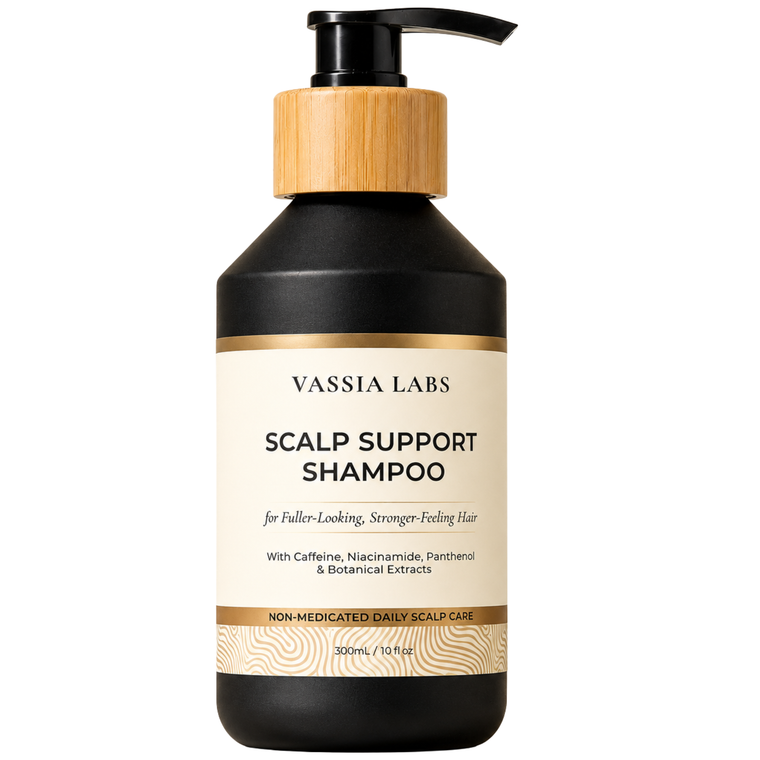
For wash-day cleansing, Vassia Labs Scalp Support Shampoo is a fragrance-free, sulfate-free and silicone-free cosmetic shampoo designed to leave fine roots feeling lighter and support stronger-feeling, fuller-looking hair. It is not a treatment for medical hair loss.
When should you see a dermatologist?
Arrange professional assessment for sudden or persistent heavy shedding, patchy loss, a progressively widening part, a clearly smaller ponytail, scalp pain or burning, thick scale, sores, scarring, eyebrow loss or another unexplained change in hair density. Earlier evaluation is more useful than trying to diagnose a changing pattern from photographs alone.
Frequently asked questions
Does seeing a lot of hair in the shower mean I am going bald?
No. Wash frequency and accumulated loose hairs can make one shower look dramatic. The more useful question is whether shedding remains elevated and whether density is progressively changing.
Can breakage make hair look thinner?
Yes. Broken strands reduce fullness through the lengths even when the follicles are still producing hair.
Can shampoo stop hair loss?
A cosmetic shampoo can support cleansing, scalp comfort and the appearance of existing hair, but it should not replace diagnosis or evidence-based treatment for a hair-loss disorder.