If your hair suddenly looks flatter, more separated or more see-through at the roots, scalp buildup can be part of the reason.
Buildup does not usually reduce the number of hair follicles. What it can do is coat fine strands with oil, dry shampoo, conditioner and styling residue so they clump together and sit closer to the scalp. That can expose more skin between the hairs and make existing density look lower than it really is.
For fine or thinning-looking hair, this cosmetic difference can be surprisingly visible because small-diameter strands are easy to weigh down.
The direct answer
Scalp and root buildup can make hair look thinner by reducing root lift and causing strands to group together. Removing ordinary buildup can make hair look fuller again because clean strands separate and move more freely.
That is different from treating true hair loss. If your part is progressively widening, your ponytail is getting smaller, or shedding has clearly increased, the cause deserves separate attention.
What counts as scalp buildup?
Buildup is material that accumulates on the scalp or near the roots instead of being fully removed during washing.
Common contributors include:
- natural scalp oil
- dry shampoo
- hairspray and texture spray
- root powders and concealers
- leave-in conditioner
- rich masks or conditioner applied near the scalp
- styling creams and oils
- incomplete shampoo rinsing
- hard-water mineral deposits
None of these automatically damages follicles. The main issue for most people is that several layers can change how the hair feels, moves and reflects light.
Why buildup makes fine hair look thinner
1. Strands clump together
Clean fine hairs can spread across the scalp and overlap one another. Oil and residue encourage neighboring strands to stick together into larger sections.
Instead of many separate hairs contributing to coverage, you see fewer visible groups with more scalp between them.
2. Roots lose lift
Fine strands have relatively little mass, so even modest coating can pull them closer to the scalp. The crown looks flatter and the part can appear more defined.
3. Oil increases contrast
Greasy roots often look darker, shinier and more separated. This can make the scalp line stand out more strongly, particularly under bright overhead lighting.
4. Styling products stop performing properly
Once the roots are coated, mousse, root-lift spray and other styling products may create more residue instead of more volume. Adding another layer to fix the first five layers is a very human solution, but not an especially useful one.
Signs buildup may be the problem
Buildup is more likely when several of these appear together:
- roots feel coated even soon after washing
- hair looks stringy or separated
- volume disappears quickly
- dry shampoo or powder is visibly present
- hair feels waxy, gritty or unusually stiff
- your normal styling products seem less effective
- the scalp feels oily while the lengths feel clean
- hair looks fuller immediately after a more thorough wash
If flaking, burning, persistent itching, redness or thick scale are prominent, do not assume buildup is the only explanation. Dandruff, seborrheic dermatitis, psoriasis and contact reactions can look similar.
Buildup vs real thinning
The easiest distinction is to compare your hair under consistent conditions.
Buildup-related flatness often improves after thorough washing and drying. The roots regain movement, strands separate better and scalp visibility decreases.
True density loss tends to persist when hair is clean and dry. You may notice a gradually widening part, reduced ponytail circumference, recession, persistent increased shedding or a change that progresses over months.
For more detail, read Fine Hair vs Thin Hair: The Difference Changes Your Routine and Hair Shedding vs Hair Loss: How to Tell the Difference.
How dry shampoo contributes
Dry shampoo absorbs some surface oil but it does not wash that oil away. The powder remains in the hair until it is brushed or shampooed out.
Repeated applications can combine with sebum, sweat and other styling products. Fine hair may initially look fuller because the powder adds texture, then progressively flatter as the layers accumulate.
If dry shampoo is a major part of your routine, see Does Dry Shampoo Cause Scalp Buildup?.
Can conditioner cause root buildup?
Conditioner is useful for reducing friction and making the lengths easier to manage. The problem is usually placement and amount rather than conditioner itself.
For fine hair, apply richer conditioner mainly through the mid-lengths and ends. If your roots go flat easily, avoid coating the scalp unless the product is specifically intended for scalp use.
Read Where Should You Apply Conditioner If Your Roots Go Flat?.
How to remove buildup without stripping fine hair
1. Wet the scalp thoroughly
Give water time to reach the crown, nape, behind the ears and underneath dense sections. Shampoo spreads more evenly on properly saturated hair.
2. Apply shampoo to several scalp areas
Do not place the entire amount at the front hairline. Distribute it around the scalp and massage gently with your fingertips.
3. Focus cleansing at the roots
Oil and product accumulation are usually concentrated near the scalp. Let the lather move through the lengths during rinsing rather than aggressively scrubbing fragile ends.
4. Shampoo twice only when needed
A second light cleanse can help after heavy dry shampoo, several days between washes, significant oil or extensive styling products. If the first wash leaves the roots clean, a ceremonial second round offers little.
5. Rinse carefully
Residual shampoo or loosened product can create the same heavy feeling you were trying to remove. Spend extra time around the crown, nape and behind the ears.
6. Condition strategically
Use enough conditioner to keep the lengths manageable, but concentrate it where the hair is older and drier.
Do you need a clarifying shampoo?
Not necessarily.
A regular shampoo used thoroughly may remove everyday oil and styling residue. An occasional clarifying product can be useful if hair stays waxy or coated after normal washing, especially with frequent dry shampoo, hairspray, heavy stylers or hard-water exposure.
Clarifying more often is not automatically better. Over-cleansing can leave fragile lengths rough and make the scalp uncomfortable.
See How Often Should You Use Clarifying Shampoo? and Scalp Detox: Do You Actually Need One?.
How often should fine, oily hair be washed?
Wash according to how quickly your scalp becomes oily, sweaty or coated rather than trying to force a universal schedule.
Fine, straight hair often shows oil quickly because sebum spreads easily along the strand and a small amount of coating can reduce volume. Some people are comfortable washing daily or every other day; others need less frequent cleansing.
The useful endpoint is a scalp that feels clean and comfortable without lengths becoming unnecessarily dry.
For a fuller guide, read How Often Should You Wash Fine or Thinning-Looking Hair?.
Where Vassia Labs fits
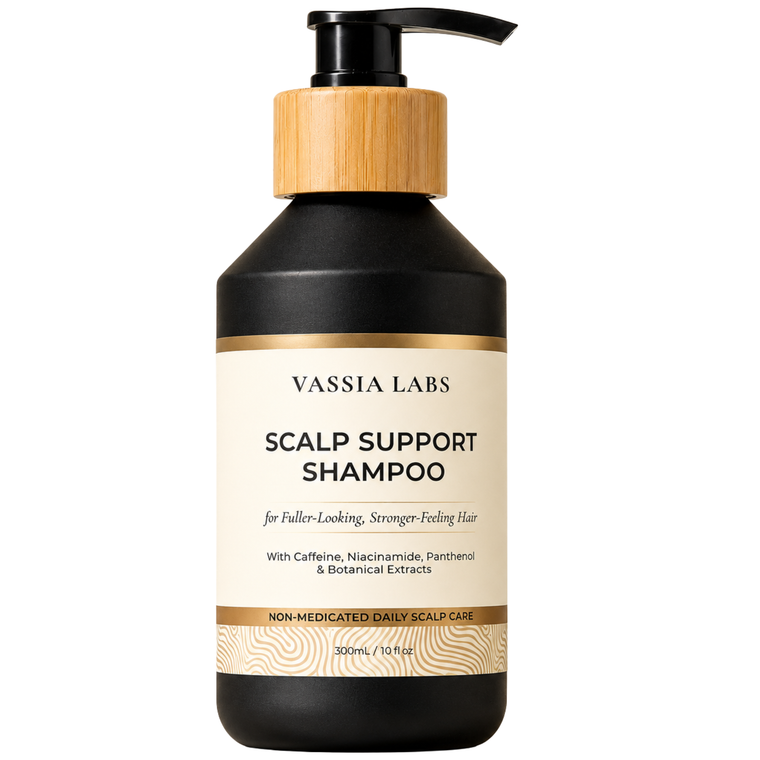
Vassia Labs Volumizing Shampoo for Fine, Flat & Thinning Hair is designed around the exact problem of roots becoming heavy, flat and coated.
The formula is fragrance-free, sulfate-free and silicone-free and is designed to cleanse everyday oil and residue while keeping the finish lightweight. It includes caffeine, rosemary, niacinamide, panthenol, ginseng, aloe, centella, hyaluronic acid, zinc PCA and hydrolyzed wheat protein as part of a broader scalp- and strand-support formula.
The goal is cosmetic and practical: cleaner roots, less unnecessary weight, softer strands and fuller-looking volume. It is not a medical treatment for hair-loss conditions.
If buildup is what makes your fine hair look flatter, a consistent cleansing routine is usually more useful than continually adding another volumizing product on top.
When buildup is probably not the whole story
Consider professional evaluation if you notice:
- a part that continues widening when hair is clean and dry
- sudden or heavy shedding
- smooth or expanding bald patches
- hairline recession
- scalp pain, burning or significant inflammation
- thick or persistent scale
- loss of eyebrows or eyelashes
- a clear reduction in density that continues over several months
Cosmetic cleansing can improve the appearance of coated hair. It cannot determine why follicles are producing fewer hairs.
Frequently asked questions
Can scalp buildup cause permanent hair loss?
Ordinary oil and styling-product buildup more commonly affect appearance, root lift and scalp comfort than permanently reducing follicle count. Persistent hair loss or significant scalp inflammation should be assessed separately.
Can buildup make a part look wider?
Yes. When oily or coated strands clump together, more scalp can show between them. Compare the part after a thorough wash and complete drying.
Will washing more often make fine hair fuller?
If oil and residue are flattening the roots, washing at an appropriate frequency can improve visible lift. More washing is not automatically better once the scalp is already clean and comfortable.
Can sulfate-free shampoo remove buildup?
Yes. Sulfate-free shampoos use other surfactants. Cleansing performance depends on the complete formula, amount used, application technique and the type of residue present.
Why does my hair look fuller right after washing?
Clean strands separate more freely because excess oil and residue have been removed. That can create more visual space and root movement without changing biological density.
Bottom line
Scalp buildup can make fine hair look thinner without actually reducing the number of hairs on your head.
Oil, dry shampoo, conditioner and styling residue can pull roots down and group strands together. A thorough but gentle cleansing routine can restore movement and make existing hair look fuller again.
If the change remains when your hair is consistently clean and dry, treat that as a separate question rather than blaming everything on buildup.