Scalp detox has become one of the loudest hair-care phrases of 2026. Scrubs, acid treatments, scalp brushes and “reset” shampoos all promise a cleaner foundation for healthier-looking hair.
The useful idea underneath the trend is simple: product residue, oil, sweat and mineral deposits can accumulate on the scalp and hair. The misleading part is the word “detox.” Your scalp is not storing mysterious toxins that need to be pulled out by an expensive jar of salt crystals.
For fine or thinning-looking hair, the distinction matters. Removing excess buildup can make roots feel cleaner, lighter and less flat. Over-cleansing can do the opposite by leaving the scalp tight, irritated or uncomfortable.
What does a scalp detox actually mean?
In practical hair care, a scalp detox usually means a more thorough cleanse than your normal wash.
That may involve:
- shampooing twice when there is significant oil or styling-product residue
- using a clarifying shampoo occasionally
- using a gentle scalp exfoliant when appropriate
- reducing dry-shampoo accumulation
- addressing hard-water mineral buildup
None of these steps “detoxify” the body. They simply remove material sitting on the scalp or hair surface.
Why scalp detoxing is trending in 2026
Hair care is increasingly borrowing the language and habits of skin care. Beauty coverage this year has focused heavily on scalp analysis, barrier care, microbiome-friendly routines and Korean scalp-spa techniques.
That shift has one genuinely useful consequence: people are paying more attention to the condition of the scalp instead of treating shampoo as something that only cleans the lengths.
Recent expert commentary has also pushed back on the idea that everyone needs an elaborate detox routine. Often, a properly performed wash with a suitable shampoo is enough.
Signs your hair may be dealing with buildup
Buildup does not look the same on everyone. Common clues include:
- roots that feel coated shortly after washing
- fine hair that looks unusually flat or separated into stringy sections
- styling products that seem to stop working
- a waxy or heavy feeling through the hair
- visible dry-shampoo residue
- flaking that appears after repeated product use
These signs are not specific to buildup. Dandruff, seborrheic dermatitis, psoriasis and other scalp conditions can also cause flaking or irritation. If symptoms are persistent, painful, inflamed or severe, a dermatologist is a better investment than another scrub.
If you are unsure whether you are seeing residue or dryness, read Product Buildup vs Dry Scalp Flakes: How to Tell the Difference.
Why fine hair notices residue faster
Fine hair refers to the diameter of each strand. Because each strand has less physical bulk, even a modest amount of oil, conditioner or styling residue can change the way the hair sits.
The result is familiar: clean-looking lengths paired with roots that collapse, clump or lose movement.
This is why the best “detox” strategy for fine hair is usually not aggressive exfoliation. It is consistent cleansing with minimal unnecessary residue.
Do you need to shampoo twice?
Sometimes.
A first wash can loosen oil, dry shampoo and styling products. A second wash may then cleanse the scalp more evenly. This can be useful after several days between washes, heavy styling or a particularly sweaty week.
It does not need to become a ritual performed every time you shower. If one wash leaves the scalp clean and comfortable, the second wash has very little to prove.
See Do You Need to Shampoo Twice? for a more detailed guide.
What about scalp scrubs and acids?
Physical scrubs and chemical exfoliants can help some people remove stubborn surface buildup, but more is not better.
Fine hair often comes with more visible scalp, which makes redness and irritation especially noticeable. Aggressive rubbing can also tangle fragile hair at the root.
If you use a scalp exfoliant:
- start infrequently
- avoid combining several exfoliating products at once
- stop if the scalp feels sore, tight or persistently irritated
- do not scrub inflamed or broken skin
Our guide Scalp Exfoliation for Fine Hair: Scrub, Acid or Better Shampooing? goes deeper into the trade-offs.
Do hard water and dry shampoo count as buildup?
They can contribute to it.
Dry shampoo is designed to absorb oil, not remove it. Repeated applications can leave powders, starches and styling polymers behind until the next proper wash.
Hard water can also leave mineral deposits on the hair. These deposits may change texture, shine and manageability, especially when combined with styling residue.
For more, read Does Dry Shampoo Cause Scalp Buildup? and Hard Water and Hair: What the Evidence Really Says.
A simple scalp reset for fine hair
- Brush or detangle before washing. This reduces knotting once the hair is wet.
- Wet the scalp thoroughly. Give the water time to reach the roots rather than immediately adding shampoo.
- Apply shampoo to the scalp, not just the lengths. Massage with fingertips instead of scratching with nails.
- Rinse extremely well. Incomplete rinsing can create the exact heavy feeling you were trying to remove.
- Repeat only if needed. A second cleanse is useful when the first wash barely lathers or the scalp still feels coated.
- Keep conditioner mainly on the mid-lengths and ends. Fine roots rarely need the heaviest part of the formula.
- Use clarifying or exfoliating products as occasional tools, not daily punishment.
Where Vassia Labs fits
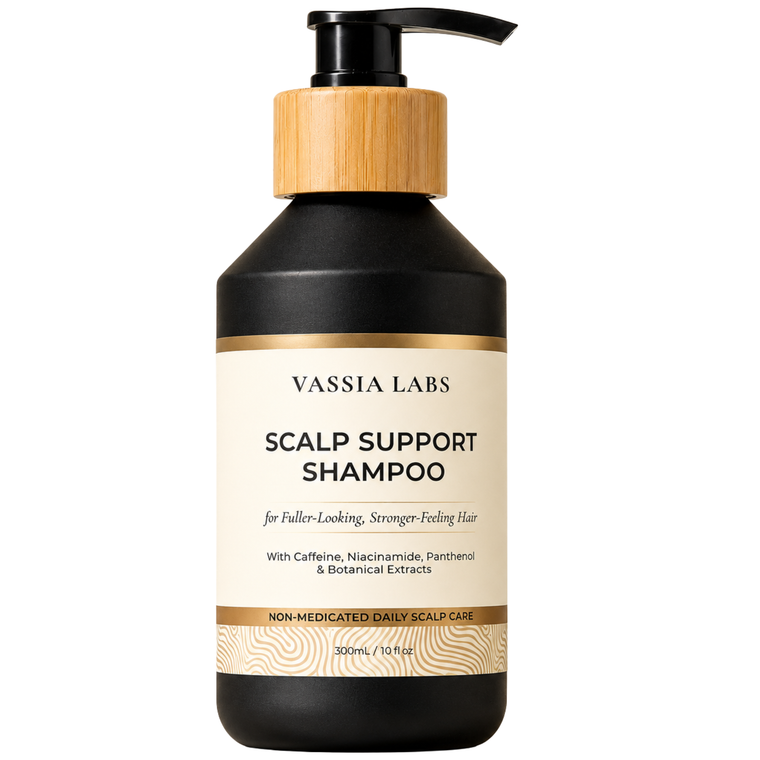
Vassia Labs Scalp Support Shampoo is designed around the less dramatic version of scalp care: cleanse thoroughly, support scalp comfort and leave fine hair light enough to move.
The fragrance-free, sulfate-free and silicone-free formula combines mild cleansing agents with niacinamide, caffeine, panthenol, rosemary extract, ginseng, aloe, centella, hyaluronic acid, zinc PCA, betaine and hydrolyzed wheat protein.
It is intended for regular cleansing and fuller, more lifted-looking hair rather than as an aggressive clarifying treatment.
Frequently asked questions
How often should I detox my scalp?
There is no universal schedule. If your regular shampoo keeps the scalp clean and comfortable, you may not need a separate detox step at all. Clarifying or exfoliating products are best used according to buildup, product use and scalp tolerance rather than a social-media calendar.
Can scalp buildup cause hair loss?
Buildup can make hair appear flatter and can contribute to scalp discomfort, but persistent or sudden hair loss has many possible causes. Do not assume a “detox” will treat an underlying hair-loss condition.
Can I detox a sensitive scalp?
Keep the routine conservative. Gentle cleansing is usually a better starting point than abrasive scrubs or multiple acids. Persistent itching, burning, redness or scaling deserves professional assessment.