Dry shampoo can cause scalp and hair buildup when it is repeatedly layered without being washed out. It absorbs some surface oil, but it does not remove oil, sweat, dead skin, styling residue or the dry shampoo itself. Regular shampoo and water are still needed for cleansing.
Dry shampoo vs regular shampoo
| Dry shampoo | Shampoo + water | |
|---|---|---|
| Main function | Absorbs some visible oil | Removes oil and accumulated material from scalp and hair |
| Can add texture | Yes | Depends on formula and styling |
| Removes previous dry-shampoo layers | No | Yes, when cleansing is thorough |
| Replaces normal washing | No | Yes, this is the cleansing step |
The American Academy of Dermatology explains that dry shampoo does not clean the hair and recommends washing with regular shampoo and water after about one or two dry-shampoo applications. See the AAD dry-shampoo guidance.
Signs of dry-shampoo buildup
- Roots feel gritty, chalky or unusually stiff.
- Fine strands clump into coated sections instead of moving separately.
- White or pale residue remains around the part or crown.
- Hair looks flat again quickly despite additional dry shampoo.
- The scalp becomes itchy or uncomfortable.
- Brushes or fingers pick up visible powder or residue.
Those signs do not prove dry shampoo is the only cause. Persistent redness, thick scale, pain, sores or ongoing hair loss can reflect another scalp condition and deserve proper evaluation.
Can dry shampoo make fine hair look thinner?
Temporarily, yes. Fine hair often looks fuller when strands remain light and separated. As oil, powder and styling products accumulate, strands can group together and sit closer to the scalp, exposing more skin between them. Removing the residue may restore movement and visible lift without changing the actual number of hairs.
Can dry shampoo cause shedding or breakage?
The AAD notes that dry shampoo left on the scalp and hair can contribute to stiffness, breakage and visible shedding, and that relying only on dry shampoo instead of washing may contribute to scalp problems such as seborrheic dermatitis. That is different from claiming that one application directly causes permanent baldness.
How to use dry shampoo with less buildup
- Apply it only where oil is visible. Fine hair often needs less product than expected.
- Follow the label. Application distance and wait time vary between products.
- Use it on dry roots. Powder on damp hair can create uneven residue.
- Distribute gently. Avoid scratching the scalp with fingernails.
- Wash it out regularly. After one or two applications, return to shampoo and water rather than adding another layer.
How to remove buildup
Wet the scalp thoroughly, distribute shampoo across several scalp areas, massage gently with fingertips and rinse completely. A second small cleanse may help after heavy oil or extensive product layering, but it is not mandatory if one wash leaves the scalp clean. Clarifying shampoo can be reserved for stubborn buildup rather than used as punishment for having oily roots.
For the difference between regular, clarifying and chelating cleansing, read Clarifying vs Chelating vs Regular Shampoo.
What if dry shampoo makes your scalp itch?
Stop applying more product and wash it out. The FDA advises consumers who experience a reaction to a cosmetic to stop using the product and contact a healthcare provider. See FDA cosmetic reaction guidance. Persistent or severe symptoms should not be managed by simply changing styling powders.
Commercial bridge: lighter roots without endless powder
If you use dry shampoo because fine roots become oily and flat quickly, start with the Flat Hair & Root Volume Guide and the Complete Guide to Fine Hair. Those pages help separate oil, residue, conditioner placement and styling issues.
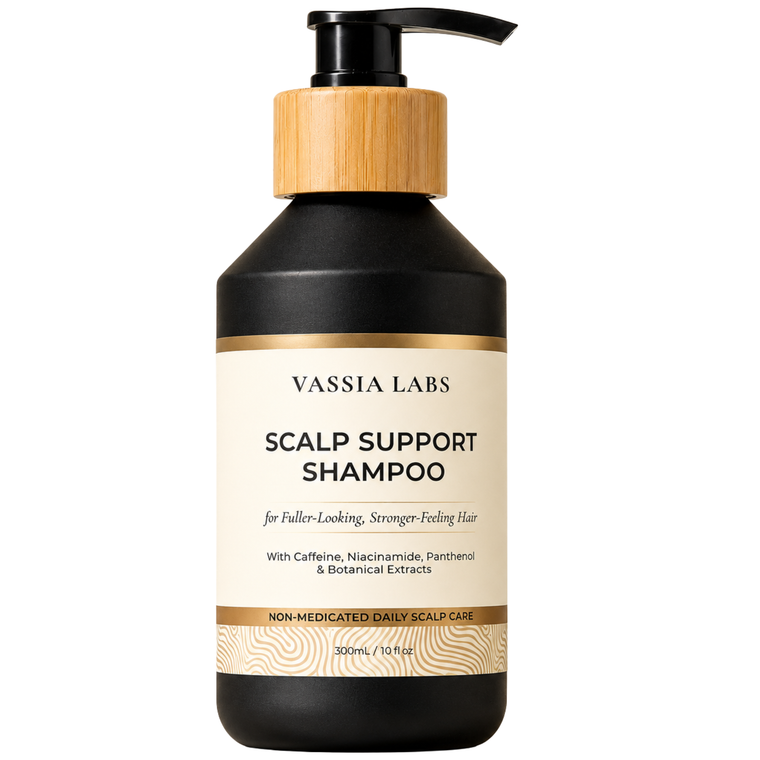
For regular cleansing, Vassia Labs Scalp Support Shampoo is fragrance-free, sulfate-free and silicone-free and is designed for fine, flat and thinning-looking hair. It can remove ordinary oil and styling residue as part of a scalp-focused wash routine. It is not a medicated dandruff treatment.
Frequently asked questions
Does dry shampoo actually clean hair?
No. It absorbs some surface oil but does not rinse accumulated material away.
How many times can I use dry shampoo before washing?
The AAD recommends washing with regular shampoo and water after about one or two dry-shampoo applications.
Can dry shampoo clog follicles?
Residue can accumulate around the scalp, but claims that ordinary dry shampoo universally blocks follicles and causes permanent baldness are too simplistic. Persistent bumps, inflammation or hair loss need a proper diagnosis.
Do I need clarifying shampoo after dry shampoo?
Not automatically. A normal shampoo may remove ordinary residue. Clarifying formulas are more useful when stubborn buildup remains after routine cleansing.