Direct answer: Flat hair is usually caused by a combination of fine strand diameter, scalp oil, buildup, conditioner or styling-product weight, natural root direction, hair length and humidity. The most reliable route to more root volume is to start with genuinely clean, lightweight roots, keep richer conditioning away from the scalp, dry the roots away from their natural flat position and use the minimum styling product needed to hold the result.
This is the Vassia Labs cornerstone guide to flat hair and root volume. Instead of treating every flat-hair problem as a reason to buy another spray, it works from the scalp outward.
Why fine hair goes flat
Fine strands have a smaller diameter, so small amounts of oil or product can change how they sit. When neighboring strands become coated, they group together, lose separation and rest closer to the scalp.
Flatness can be influenced by:
- scalp oil
- dry shampoo and styling residue
- heavy conditioner near the roots
- incomplete rinsing
- long hair pulling downward
- air-drying in one fixed part
- humidity
- touching and smoothing the crown repeatedly
- rich leave-in products
- natural growth direction
- lower overall density
For the broader strand-type explanation, start with The Complete Guide to Fine Hair.
Flat immediately after washing vs flat later in the day
The timing helps identify the problem.
If roots are flat immediately after washing
Look first at cleanser distribution, conditioner placement, rinsing and drying direction. Residue or a very rich formula can leave fine hair soft but heavy before the day even begins.
Use Why Are My Roots So Flat After Washing? for a complete wash-day diagnosis.
If roots look full in the morning but flat by afternoon
Oil, humidity, hand contact and accumulating product weight become more likely. Read Why Fine Hair Goes Flat by Afternoon.
Step 1: create a genuinely clean root area
Root volume is easier when strands can separate. Shampoo should therefore remove the level of oil, sweat and residue created by your routine without forcing you to scrub aggressively.
Wet the scalp thoroughly, distribute shampoo across several areas and massage with fingertips. Pay attention to the crown, hairline, behind the ears and nape. Rinse longer than seems necessary if your hair often feels coated.
A second light cleanse can make sense after heavy dry shampoo, oil or styling products. It is not mandatory on every wash day.
For choosing a formula, read Shampoo for Flat Roots: The Fine-Hair Buying Checklist and Best Volumizing Shampoo for Fine Hair: What to Look For.
Step 2: stop conditioning the roots like the ends
The oldest ends often need more slip and softness than the newest hair near the scalp. Treating both areas identically can flatten fine roots.
Apply ordinary conditioner mainly through the mid-lengths and ends unless it is specifically designed for scalp use. Start with a small amount and increase only where the hair remains dry or difficult to detangle.
If your hair looks separated after conditioning, read Why Does Conditioner Make Fine Hair Look Stringy?.
Step 3: reduce invisible buildup
Volume products are still products. Dry shampoo, mousse, texture spray, hairspray, oils and heat protectants can all accumulate over time.
Signs that buildup may be reducing volume include roots that feel waxy, gritty or stiff, hair that is difficult to rinse clean, fast return of flatness after washing or a crown that seems coated while the ends feel dry.
See Can Scalp Buildup Make Hair Look Thinner? and Scalp Detox: Do You Actually Need One?.
Step 4: dry the roots in the opposite direction
Hair tends to set in the position in which it dries. If wet roots remain pressed into the same part until completely dry, no shampoo can negotiate them upward by diplomatic means.
Useful techniques include:
- switching your part while the roots dry
- lifting small sections with your fingers
- directing airflow against the natural root direction
- using moderate heat with stronger airflow rather than extreme heat
- allowing roots to cool while lifted
- returning the part to its normal position only after the root area is mostly dry
If you want root volume without layering powders and sprays, see How to Get Root Volume Without Dry Shampoo or Heavy Styling Products.
Step 5: choose one primary styling strategy
For fine hair, more products do not automatically create more volume. Each layer adds material that later has to remain weightless and eventually be removed.
A simple hierarchy works well:
- Start with clean, lightweight roots.
- Choose one primary volumizer such as mousse or a targeted root-lift product.
- Use texture spray only if you specifically need grip.
- Use hairspray only where hold is needed.
- Keep oils and richer smoothing products mostly off the root area.
Compare the major categories in Volumizing Mousse vs Root-Lift Spray vs Texture Spray.
How oily roots destroy volume
Oil makes fine strands group together and sit closer to the scalp. This is why hair can look less full as it becomes greasy even though the biological density has not changed in a few hours.
If the roots become oily quickly, review wash frequency, scalp-product use and how often you touch the crown. Dry shampoo can temporarily absorb oil, but it does not replace washing away accumulated sebum, sweat and product residue.
How humidity affects root volume
Humidity can change the shape established during drying and make some fine-hair styles collapse. The goal is not to coat the hair so heavily that moisture can never reach it. That cure has a habit of becoming the next flatness problem.
Use lightweight hold, avoid excessive layering and adapt your styling routine seasonally. See Summer Hair Routine for Fine Hair: Humidity, Sweat and Flat Roots.
Can reverse washing create more volume?
Applying conditioner before shampoo can help some people keep softness through the lengths while reducing residual weight afterward. It is not universally better, but it can be a useful experiment for very fine hair that is easily over-conditioned.
Read Reverse Hair Washing for Fine Hair.
Can hair oiling work with flat roots?
Yes, but placement and cleansing matter. Heavy oil on the scalp can be difficult to remove from very fine hair and may require stronger washing afterward.
If you use oil, concentrate on the lengths unless you have a specific scalp reason for using it and know you tolerate it. See Hair Oiling for Fine Hair: How to Avoid Greasy, Flat Roots.
Flat roots vs thinning hair
Flatness is a styling and positioning issue. Thinning refers to reduced density or another meaningful change in the amount of hair present.
Flat roots can make the scalp more visible, especially around the part. But if your part is progressively widening, your ponytail has become meaningfully smaller, shedding has increased for an extended period or you see distinct bald areas, do not treat the entire problem as a volume issue.
Read Fine Hair vs Thin Hair and Hair Density vs Thickness vs Volume.
A seven-step root-volume routine
- Wash when your roots need it. Oil and buildup are enemies of separation.
- Clean the entire scalp. Do not shampoo only the front section you can see in the mirror.
- Rinse thoroughly. Residue creates weight and can contribute to discomfort.
- Condition lower. Give the ends softness without smothering the crown.
- Blot gently. Avoid rough friction on fragile strands.
- Dry roots away from their normal flat position. Direction matters.
- Add only enough styling support to hold the result. Stop before the volume routine becomes a product buildup routine.
Where Vassia Labs fits
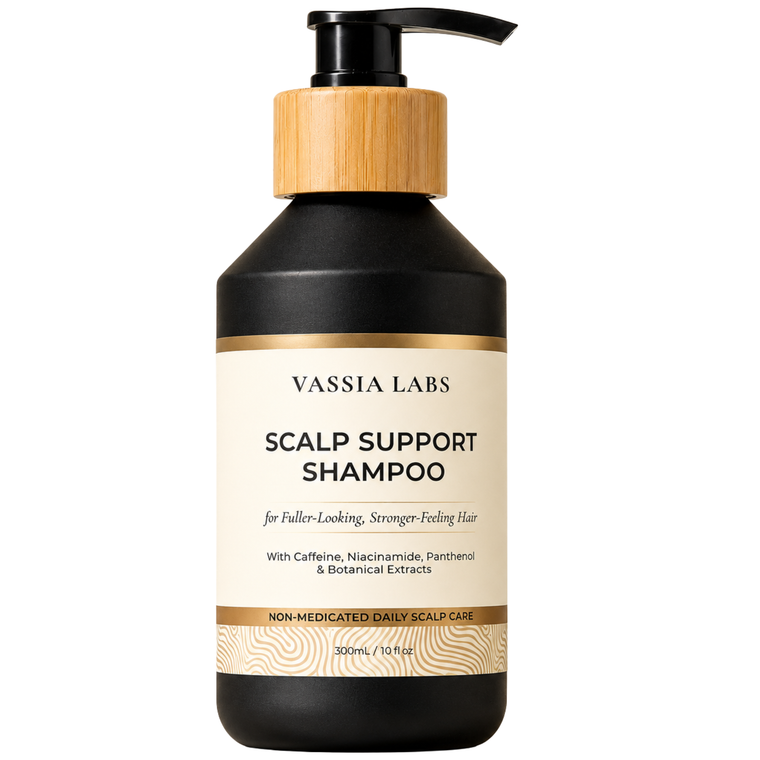
Vassia Labs Volumizing Shampoo for Fine, Flat & Thinning Hair is designed to create the clean, lightweight foundation that flat roots need.
It is fragrance-free, sulfate-free and silicone-free and contains caffeine, rosemary, niacinamide, panthenol, saw palmetto, ginseng, aloe, centella asiatica, hyaluronic acid, zinc PCA, betaine, hydrolyzed wheat protein, vitamin E, biotin and chamomile.
The product is non-medicated. Its role is to cleanse the scalp and roots, reduce the heavy coated feel that can collapse fine hair, support softer and stronger-feeling strands and help existing hair look fuller through lightweight volume.
Frequently asked questions
Why are my roots flat even after washing?
Common causes include incomplete cleansing, conditioner near the scalp, residue, very fine strands and drying the hair in one fixed downward direction.
Why does my hair go flat by lunchtime?
Scalp oil, humidity, touching the roots and cumulative styling-product weight can all reduce volume as the day progresses.
Should I shampoo twice for more volume?
Only when the first wash does not remove significant oil or product buildup. A second cleanse is a tool, not a compulsory ceremony.
Does silicone-free shampoo give more volume?
Some people with very fine hair prefer silicone-free formulas because they want less residual coating. The total formulation and how your hair responds matter more than one absent ingredient.
Can dry shampoo replace washing for flat roots?
No. Dry shampoo can absorb some surface oil and add texture, but it does not remove accumulated oil, sweat and product residue from the scalp.
Can shampoo permanently lift my roots?
No. Shampoo can reduce weight and improve separation. Root direction, strand diameter, density, drying and styling still determine the final lift.