Fine hair can leave the house looking airy and full, then quietly surrender to gravity by afternoon. The change is usually not imaginary. Fine strands are particularly sensitive to small increases in oil, moisture and product weight.
Keeping volume longer is less about finding one industrial-strength styling product and more about reducing the things that progressively pull the roots down.
Why volume disappears during the day
Scalp oil spreads along fine strands
Fine and straight hair can show oil quickly because sebum moves easily along the strand. As roots become coated, hairs group together and sit closer to the scalp.
If this happens very quickly, read Why Does My Hair Get Oily So Quickly?.
Humidity changes the style
Moisture in the air can disrupt the shape created during blow-drying. Depending on your hair, humidity may increase frizz, reduce smoothness or make the roots settle.
Too much product accumulates
Mousse, leave-in conditioner, oil, heat protectant, texture spray and hairspray can each be useful. On fine hair, using all of them generously can erase the volume they were meant to create.
Roots were dried flat
If the hair dries in its natural downward position, styling product has to work harder to lift it later. Root direction set during drying matters.
How to keep fine hair fuller longer
1. Start with genuinely clean roots
Shampoo the scalp rather than merely letting foam pass over it. Rinse thoroughly and repeat only when oil or product use means the first cleanse was not enough.
2. Keep conditioner lower
Use conditioner where the hair needs it most, usually through the mid-lengths and ends. Fine roots that already go flat rarely benefit from a rich layer at the scalp.
3. Dry for lift
Lift root sections away from the scalp, temporarily switch your part or direct airflow against the way the roots naturally lie. Let the roots cool in the lifted position before flattening them with your hands.
4. Use fewer styling layers
Pick one primary volume product. If mousse gives enough support, you may not need texture spray. If your roots need only targeted lift, a root spray may be more efficient.
Compare them in Volumizing Mousse vs Root-Lift Spray vs Texture Spray.
5. Touch your roots less
Hands transfer oil and repeatedly smoothing the crown physically pushes the hair back down. The urge to check whether your hair is still voluminous is, tragically, one of the ways to make it less voluminous.
6. Use dry shampoo strategically
If oil is the main afternoon problem, a small targeted amount can help. Avoid treating the entire scalp preventively every day unless you genuinely need it, because repeated powder can create buildup.
See Does Dry Shampoo Cause Scalp Buildup?.
When the problem is the shampoo
If your roots are already flat immediately after drying, the shampoo or conditioning routine may be leaving too much weight behind.
Look for a formula that cleans effectively and leaves strands soft but separate. Fine hair should not have to feel rough to look full.
Where Vassia Labs fits
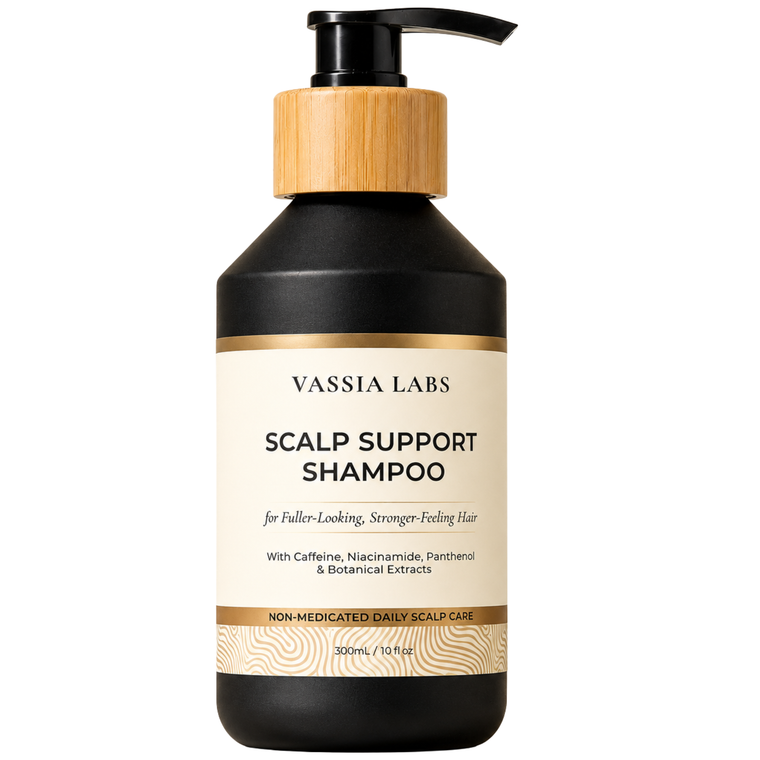
Vassia Labs Volumizing Shampoo for Fine, Flat & Thinning Hair is designed around the problem of volume disappearing under oil and residue.
It is fragrance-free, sulfate-free and silicone-free, with caffeine, rosemary, niacinamide, panthenol and additional scalp- and strand-support ingredients. The intended finish is clean, soft, airy and lightweight.
Frequently asked questions
Why does fine hair get oily so fast?
Scalp oil is more visible on fine strands and can spread easily along straight hair. Product buildup and touching the roots can make the effect more obvious.
Can shampoo make volume last all day?
Shampoo can create a lighter foundation by removing oil and residue, but lasting volume also depends on humidity, drying, density, strand diameter and styling.
Should I use hairspray on fine hair?
You can, but use the minimum amount that holds the style. Heavy application can add weight and stiffness.
Bottom line
When fine hair goes flat by afternoon, think cumulative weight. Cleaner roots, less product, smarter drying and strategic oil control usually outperform piling another volumizer onto the problem.