Rapid or substantial weight loss can be followed by increased hair shedding a few months later. The American Academy of Dermatology (AAD) lists losing 20 pounds or more as one possible trigger for excessive shedding, often called telogen effluvium. The delay matters: the scale may have already stabilized by the time more loose hairs start appearing in the shower.
This pattern is often temporary when the trigger has resolved, but not every case of thinning after weight loss is telogen effluvium. Progressive widening of the part, patchy loss, scalp symptoms or shedding that keeps worsening deserves professional assessment.
Why can weight loss affect shedding?
A major physical or nutritional change can shift more hairs into the resting and shedding portion of the hair cycle. Because hairs do not release immediately, the visible increase commonly appears a few months after the trigger rather than during the first week of a diet or illness.
The AAD notes that temporary excessive shedding can follow substantial weight loss. That does not prove that every calorie deficit, diet or medication is directly damaging hair follicles. The surrounding context matters, including how quickly weight changed, whether food intake became restricted, recent illness or surgery, medications and other health conditions.
What does temporary shedding usually look like?
Telogen effluvium is generally diffuse. You may notice more full-length hairs when washing or brushing and less overall fullness across the scalp rather than one sharply defined bald patch.
Breakage looks different. Shorter pieces, frayed ends and damage concentrated through the lengths point more toward shaft damage from heat, bleach, friction or tension. Read Hair Shedding vs Hair Breakage if you are not sure which pattern you are seeing.
How long can it take to settle?
There is no useful countdown that applies to everyone. The AAD says excessive shedding often becomes noticeable a few months after a trigger and that normal fullness may return over roughly six to nine months once the body readjusts and the trigger has resolved. Ongoing stress, restrictive intake or another medical cause can change that course.
Use that as general context, not a deadline. A pattern that remains heavy, becomes progressively worse or does not fit diffuse temporary shedding should be assessed.
What should you do?
- Avoid crash-dieting or further unnecessary restriction. Sustainable nutrition matters more than chasing a hair supplement.
- Discuss major dietary changes with a qualified clinician. If intake has become limited, a professional can decide whether nutritional assessment is appropriate rather than guessing at deficiencies.
- Handle the lengths gently. Lower effective heat, reduce tight styles and detangle carefully so breakage does not compound temporary loss of fullness.
- Keep the scalp clean and comfortable. Avoiding shampoo does not keep hairs that have entered the shedding phase permanently attached.
- Track monthly trends. Consistent photographs of the part and crown are more useful than counting individual strands.
Where shampoo fits
Shampoo can remove oil and residue, help fine strands separate at the roots and make existing hair look fuller. It cannot correct a nutritional deficiency or reverse the internal trigger behind telogen effluvium.
The Complete Guide to Thinning-Looking & Fragile Hair explains how to separate shedding, breakage, flatness and true density change before choosing products.
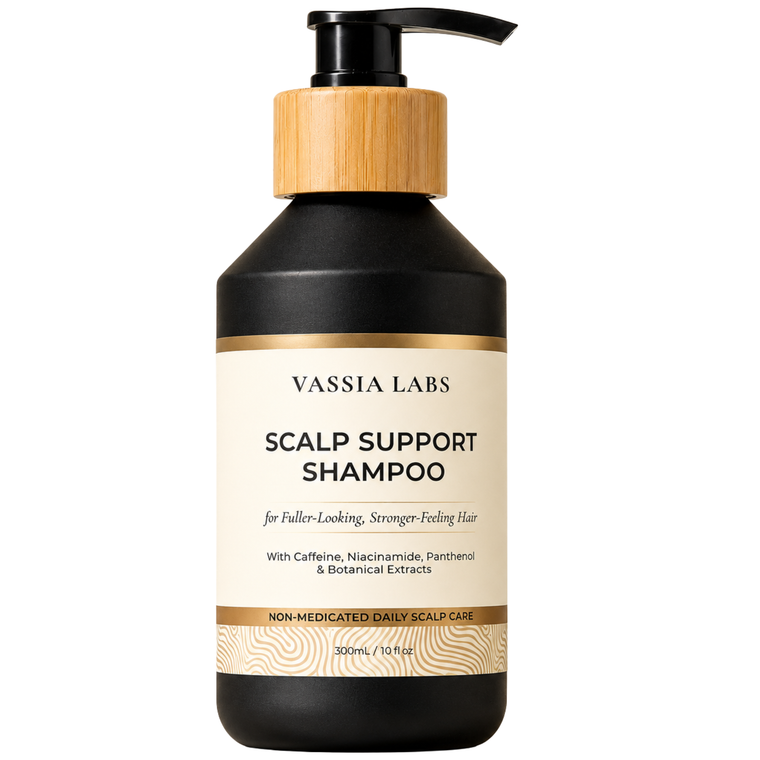
Vassia Labs Scalp Support Shampoo is a fragrance-free, sulfate-free and silicone-free cosmetic cleanser designed for fine, flat and thinning-looking hair. It can support lightweight cleansing and fuller-looking wash days; it is not a treatment for weight-loss-related hair shedding.
When should you see a dermatologist?
Seek professional assessment for persistent or worsening heavy shedding, a progressively widening part, a clearly smaller ponytail, smooth patches, scalp pain or burning, thick scale, sores, scarring, or other unexplained symptoms. If the weight loss was unintentional, that itself deserves medical attention.
Frequently asked questions
Can losing weight cause hair shedding?
Substantial weight loss is one recognized trigger for temporary excessive shedding. The AAD specifically lists losing 20 pounds or more as a possible trigger.
Does shedding start immediately?
Often not. Telogen effluvium commonly becomes noticeable a few months after the triggering event because of the timing of the hair cycle.
Should I take hair vitamins?
Do not assume a supplement is needed. If restricted intake or deficiency is a concern, discuss it with a qualified healthcare professional rather than self-prescribing high-dose supplements.