Direct answer: remove excess water by blotting rather than rubbing, minimize tension while fine hair is very wet, and if you use a dryer, keep it moving at a moderate temperature and reasonable distance. Air-drying is not automatically damage-free, but that does not mean high heat is safer.
A controlled 2011 study found increasing surface damage as dryer temperature increased. In that experiment, drying with a moving dryer about 15 cm from the hair at a moderate temperature caused less observed damage than prolonged natural drying. The useful lesson is control, not devotion to one drying method.
Why wet fine hair needs gentle handling
Water changes the mechanical behavior of hair. Wet strands stretch more easily, and rough handling can increase tangling and breakage.
Fine hair has a smaller strand diameter, so loss of even short pieces through breakage can reduce visible fullness quickly.
Common sources of avoidable stress include:
- vigorous towel rubbing
- twisting wet hair tightly
- brushing straight hair aggressively while soaking wet
- holding a hot dryer close to one spot
- repeated passes with very hot tools after blow-drying
Step 1: blot rather than rub
Use a smooth, absorbent towel or cloth and press water from the hair. Microfiber can be convenient because it absorbs quickly, but the technique matters more than owning one specific textile.
Do not twist the hair into a tight rope or scrub the lengths between the towel.
Step 2: detangle with less tension
If your hair is straight or only slightly wavy, allowing it to dry a little before intensive detangling can reduce the amount of stretching required. Work from the ends upward and use conditioner or a suitable detangling product if needed.
The American Academy of Dermatology specifically recommends gentler handling when hair is wet.
Step 3: if blow-drying, use distance and movement
The hair-dryer study compared several combinations of distance and temperature. Damage to the hair surface increased with temperature, while the group dried at a greater distance with continuous motion performed better than the hottest close-range groups.
Practical takeaway:
- avoid pressing the nozzle close to the hair
- keep the dryer moving
- use the lowest effective temperature
- use airflow to do more of the work instead of relying on extreme heat
The exact laboratory temperatures are not a universal at-home prescription. Hair type, dryer design and drying time vary.
Is air-drying always safer?
No, but the answer needs nuance.
Air-drying avoids direct dryer heat, which is a real advantage. However, prolonged water exposure and repeated handling while hair remains wet are not automatically harmless. The cited study observed cell-membrane-complex damage in its naturally dried group, although a single laboratory experiment should not be turned into a rule that everyone must blow-dry.
If air-drying works for you, reduce unnecessary touching and avoid sleeping on soaking-wet hair or keeping it under prolonged tension.
How to dry for root volume without maximum heat
You do not need extreme heat to create temporary lift.
- Blot the roots until they are damp rather than dripping.
- Change your part while drying.
- Lift small root sections away from the scalp with your fingers.
- Direct airflow against the natural root direction.
- Keep the dryer moving.
- Let roots cool before pressing them back into their final part.
For the complete styling system, read The Complete Guide to Flat Hair & Root Volume.
Do you need heat protectant?
A heat-protectant product can help reduce some styling damage when used as directed. Choose an amount and texture appropriate for fine hair so the product does not create unnecessary root weight.
Apply according to the product instructions rather than assuming more spray equals more protection.
What if fine hair takes forever to dry?
Product buildup, very dense hair, heavy conditioning and high porosity can all change drying time. If your hair suddenly feels coated or takes much longer to dry after a routine change, review the amount of conditioner and leave-in products you are using.
See Can Fine Hair Be Over-Conditioned?.
Where Vassia Labs fits
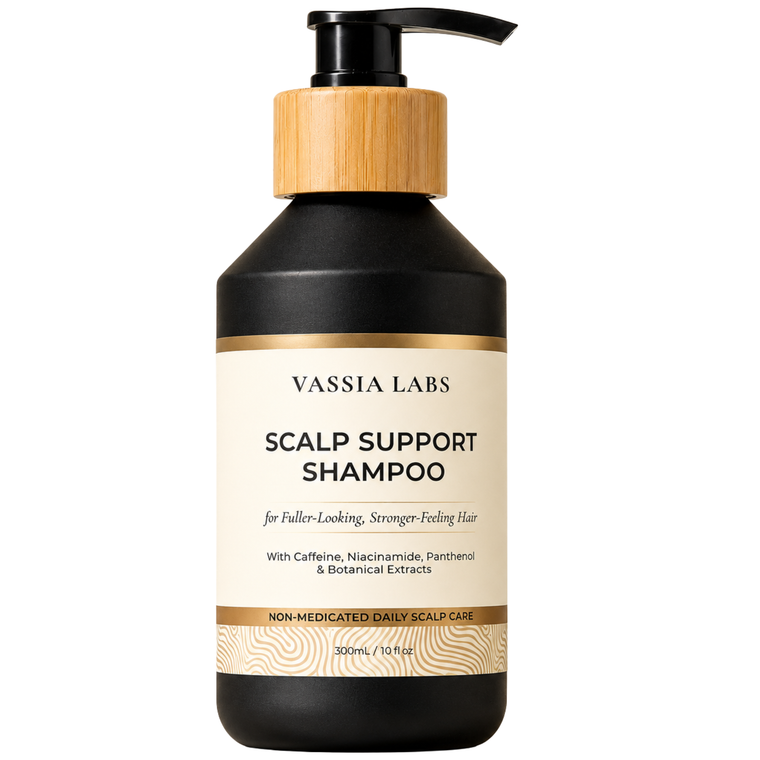
Vassia Labs Volumizing Shampoo is designed to leave fine roots clean and lightweight before drying. It is fragrance-free, sulfate-free and silicone-free and is positioned for cosmetic volume and scalp-focused cleansing.
Shampoo cannot protect hair from careless high heat after the shower. Drying technique still matters.
Frequently asked questions
Is a microfiber towel required?
No. A smooth, absorbent material used with gentle blotting can work well.
Is blow-drying always worse than air-drying?
No. Temperature, distance, movement and drying time matter. One controlled study found moderate moving airflow at greater distance caused less observed damage than natural drying in that test.
How hot should the dryer be?
Use the lowest effective temperature that dries efficiently and keep the dryer moving. There is no one exact setting for every dryer and hair type.
Should I brush fine hair while soaking wet?
For straight fine hair, letting it dry somewhat before intensive brushing can reduce tension. Curly and coily hair may require different detangling timing.
Can blow-drying create volume without damage?
You can reduce damage risk by using moderate heat, distance, movement and minimal tension while directing roots for lift.