Traction alopecia is hair loss caused by repeated pulling on the hair. Early signs can include pain from a style, broken hairs, bumps, thinning around the hairline or loss where extensions, braids, ponytails or other styles create repeated tension. Reducing that tension early matters because long-standing traction can become permanent.
The American Academy of Dermatology specifically warns that repeatedly wearing tight hairstyles can cause traction alopecia. See its guidance on hairstyles that pull.
Early warning signs
| Sign | What it can suggest | Useful next step |
|---|---|---|
| Pain, stinging or a “too tight” feeling | The style is creating excessive tension | Loosen or remove it rather than waiting for the pain to settle |
| Broken hairs around the hairline or high-tension areas | Repeated mechanical stress | Switch to a lower-tension style and reduce repeated pulling |
| Thinning at edges, temples or under extensions | Possible traction-related loss | Stop the pulling pattern and arrange dermatology assessment if it persists |
| Smooth, shiny or progressively bare areas | Possible long-standing follicle damage | Seek professional evaluation promptly |
What to change first
- Stop painful styles. Pain is not proof that a style is “working” or merely needs time to settle.
- Reduce tension and weight. Looser styles and lighter extensions reduce repeated pulling.
- Rotate placement. Repeated stress in the same area can concentrate damage.
- Handle the hairline gently. Avoid combining tight styling with aggressive brushing or heat.
- Get help early if thinning continues. A dermatologist can distinguish traction alopecia from other causes of hair loss.
Traction alopecia vs breakage
Breakage means the hair shaft snaps. Traction alopecia involves loss related to repeated pulling on follicles. Both can happen at the same time. If you are unsure what you are seeing, use the Thinning-Looking & Fragile Hair Guide to compare shedding, breakage and visible density changes.
Where shampoo fits
Shampoo can clean oil and residue from the scalp and improve the manageability of existing strands. It does not treat traction alopecia. The meaningful intervention is removing the repeated tension and getting medical advice when loss persists.
Commercial bridge: support a lower-friction routine
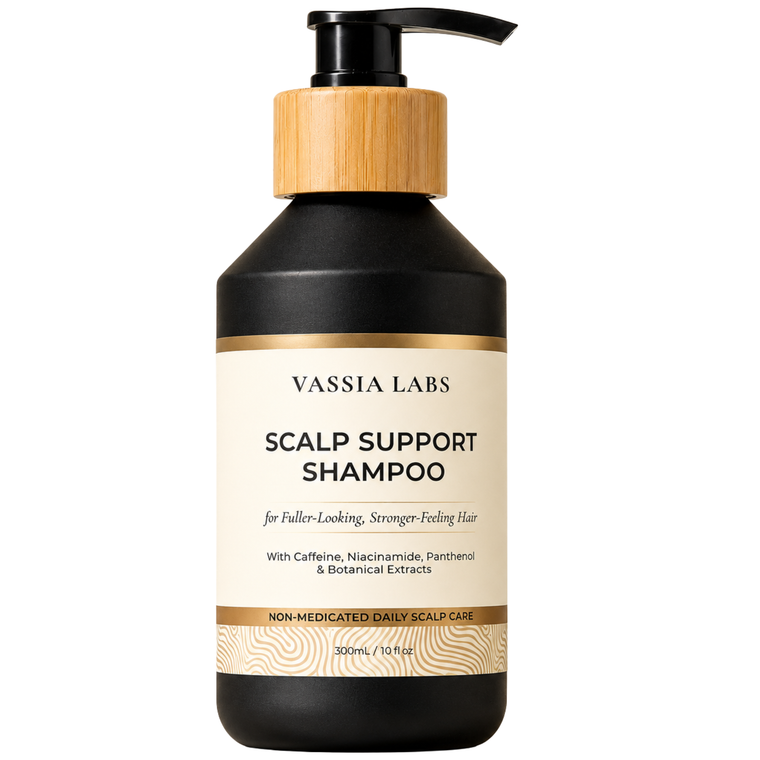
If fragile hair is also becoming difficult to wash or detangle, simplify the routine around the hair you still have. Vassia Labs Scalp Support Shampoo is fragrance-free, sulfate-free and silicone-free and is designed for fine, flat and thinning-looking hair. Its role here is gentle cosmetic cleansing, not reversing follicle damage from tight hairstyles.
Frequently asked questions
Can traction alopecia grow back?
Early traction-related loss may improve after the pulling stops, but long-standing traction can cause permanent loss. Early intervention is therefore important.
Are protective styles always protective?
No. Any style that is painful, very tight or heavy can create damaging tension despite the label used for it.
Should a hairstyle hurt at first?
No. Pain is a warning that the style is too tight and should be loosened.