A sensitive-feeling scalp usually does better with a simple, stable routine than with a shelf full of “soothing” products added all at once. The goal is not to strip the scalp or chase every sensation. It is to cleanse effectively, keep unnecessary formula variables low, protect the hair lengths and make it easy to tell what your scalp actually tolerates.
Persistent burning, marked redness, sores, thick scale, significant itching or hair loss should not be treated as a normal “adjustment period.” Those symptoms deserve professional assessment rather than more product experimentation.
A minimal routine for a sensitive-feeling scalp
1. Cleanse when the scalp needs it
Wash often enough to remove oil, sweat and product residue without aggressive scratching or repeated shampooing simply because the scalp feels imperfect. Use your fingertips rather than your nails and rinse thoroughly.
2. Keep conditioner focused on the lengths
If your roots are fine or easily weighed down, apply conditioner mainly from the mid-lengths downward. This reduces unnecessary residue at the scalp while still helping the lengths detangle and feel smoother.
3. Introduce one new product at a time
If you change shampoo, conditioner, scalp serum and styling products together, you lose the ability to identify what helped or what caused irritation. Keep the rest of the routine stable while testing one meaningful change.
4. Avoid turning “gentle” into “does not cleanse”
A cleanser still needs to remove everyday oil and residue. Fine hair can look flatter and the scalp can feel less comfortable when buildup is allowed to accumulate simply because stronger cleansing has been avoided on principle.
5. Reduce unnecessary fragrance if it has bothered you before
Fragrance-free products can be a sensible choice for people who prefer to avoid fragrance or know that fragranced cosmetics have irritated them before. But “fragrance-free” does not guarantee that every person will tolerate every ingredient.
What should you avoid?
- Constant product switching: it creates more variables and makes patterns harder to identify.
- Aggressive scrubbing: harder is not cleaner, and nails can physically irritate the scalp.
- Heavy layering at the roots: multiple oils, serums, dry shampoos and styling products can make fine hair feel coated and complicate troubleshooting.
- Assuming discomfort is normal: a new shampoo should not require you to “push through” persistent burning or worsening irritation.
How do you choose a shampoo?
Look for a formula that cleans effectively without leaving your roots feeling coated, and keep the ingredient list and routine understandable enough that you can judge tolerance. If fragrance is a known problem for you, choosing fragrance-free removes one avoidable variable.
For a fuller decision framework, read How to Choose a Shampoo for a Sensitive Scalp.
Where Vassia Labs fits
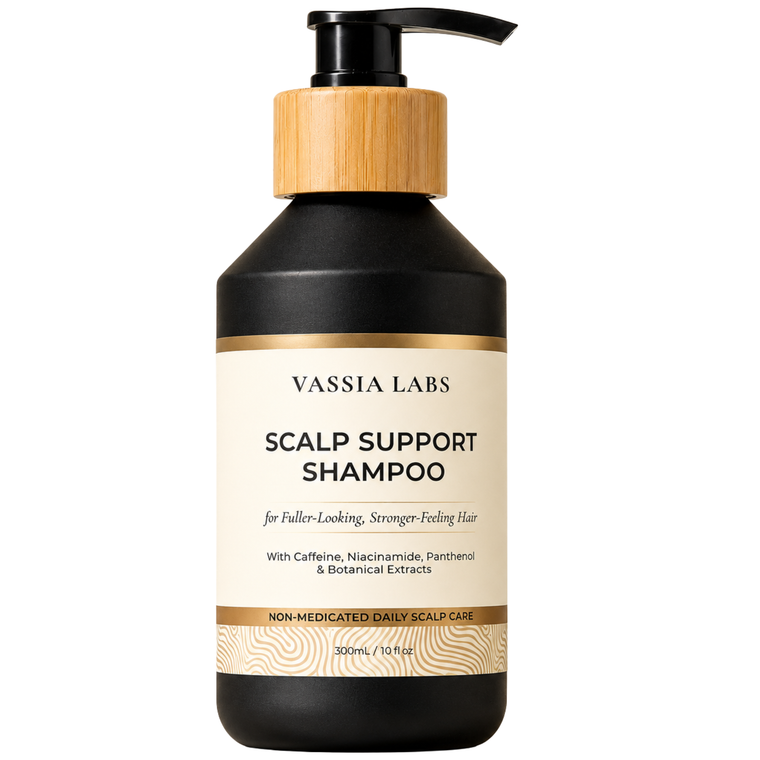
Vassia Labs Scalp Support Shampoo is a fragrance-free, sulfate-free and silicone-free cosmetic cleanser designed for fine, flat and thinning-looking hair. It is intended to remove everyday oil and buildup without a heavy residue so roots can feel lighter and existing hair can look fuller.
It is a non-medicated cosmetic shampoo. It is not a treatment for eczema, psoriasis, dermatitis, allergy or another scalp disorder.
When should you see a dermatologist?
Arrange professional assessment for persistent or worsening burning, significant redness, sores, thick or stubborn scale, pus, scarring, patchy hair loss or another unexplained scalp change. A dermatologist can determine whether the issue is irritation, allergy, a scalp condition or something else rather than making you solve it by trial and error.
Frequently asked questions
Should a new shampoo make my scalp itch at first?
Persistent or worsening itching should not be treated as a required adjustment phase. Stop using a product that appears to be causing significant irritation and seek professional advice if symptoms persist.
Is fragrance-free always safer?
No. It removes added fragrance as one possible variable, but any cosmetic formula can contain ingredients that an individual does not tolerate.
How many products does a sensitive scalp need?
Usually fewer than marketing departments would prefer. A cleanser, an appropriate conditioner for the lengths and only genuinely useful styling products are enough for many routines.