Caffeine and rosemary have become two of the most recognizable ingredients in shampoos marketed to people worried about fine or thinning-looking hair. That popularity creates a predictable problem: shoppers are often encouraged to choose between two “hero ingredients” before considering whether the shampoo itself is actually suitable for fine hair.
The more useful answer is that caffeine and rosemary can both fit into a thoughtful scalp-care formula, but neither should be treated as a substitute for effective cleansing, a lightweight finish or medical treatment when true hair loss is involved.
Caffeine in shampoo
Caffeine is used in scalp-care products because laboratory research has made it interesting in the context of hair follicles. The much harder question is whether a rinse-off shampoo delivers a meaningful clinical hair-growth result in ordinary use.
Evidence for caffeine shampoo as a treatment for hair loss remains limited. That means it is better viewed as a scalp-care ingredient within a cosmetic formula rather than a reason to expect regrowth.
For a deeper evidence-focused explanation, read Caffeine in Hair Products: What the Evidence Says.
Rosemary in shampoo
Rosemary is popular because of growing interest in botanical scalp care. Research involving rosemary oil is often repeated online as though it automatically proves that any rosemary-containing shampoo will regrow hair. It does not.
A rinse-off shampoo, an essential oil and a leave-on preparation are different products with different concentrations and contact times.
Rosemary can still be a useful botanical component of a cosmetic scalp-care formula, but expectations should stay realistic. Read Rosemary in Shampoo: What It Can and Cannot Do.
So which is better for fine hair?
For fine hair specifically, neither ingredient wins by itself. The more important questions are:
- Does the shampoo remove root oil and everyday buildup?
- Does it rinse cleanly?
- Does it leave fine strands soft rather than heavily coated?
- Is the formula appropriate for your scalp?
- Are its claims cosmetic and realistic?
A beautifully marketed rosemary shampoo that leaves your roots waxy is not a good volumizing shampoo. Neither is a caffeine formula that strips the lengths and makes them difficult to manage.
Can caffeine and rosemary be used together?
Yes. There is no reason a cosmetic shampoo must choose one. In fact, using both can make sense when they are part of a broader formula rather than being asked to carry the entire marketing story.
Other ingredients can play complementary cosmetic roles. Niacinamide is commonly used in scalp-care formulas, panthenol supports softness and manageability, and hydrolyzed proteins can help fine strands feel more substantial and conditioned.
See Best Shampoo Ingredients for Fine, Thinning Hair.
What matters more than the hero ingredient
Contact time
Shampoo is designed to be rinsed away. That is one reason strong treatment claims based on a single shampoo ingredient deserve skepticism.
Concentration
An ingredient appearing on the label tells you it is present, not that it is present at the same concentration used in unrelated research.
The complete formulation
Surfactants, conditioning agents, humectants and the overall rinse feel determine whether the shampoo actually suits fine hair.
Your primary goal
If your goal is fuller-looking hair, reducing root weight and improving strand separation may produce a more immediate cosmetic difference than obsessing over which botanical has the better internet mythology.
Where Vassia Labs fits
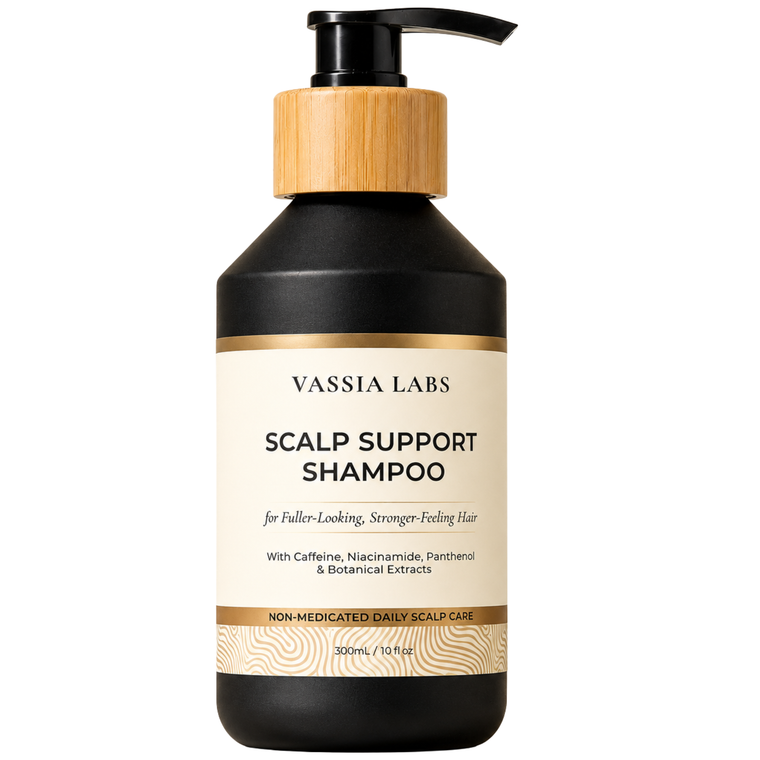
Vassia Labs Volumizing Shampoo for Fine, Flat & Thinning Hair contains both caffeine and rosemary rather than forcing them into a duel.
They are combined with niacinamide, panthenol, ginseng, aloe, centella, hyaluronic acid, zinc PCA, betaine, hydrolyzed wheat protein, vitamin E, biotin and chamomile in a fragrance-free, sulfate-free and silicone-free formula.
The product is designed for lightweight cleansing, scalp support, stronger-feeling strands and fuller-looking volume. It is non-medicated and is not intended to treat hair loss.
Frequently asked questions
Is rosemary shampoo proven to regrow hair?
No. Evidence involving other rosemary preparations should not be treated as proof that a rinse-off rosemary shampoo regrows hair.
Does caffeine shampoo stop shedding?
Caffeine shampoo should not be relied on as a treatment for unexplained or medically driven shedding. Persistent changes in shedding deserve proper evaluation.
Can I use caffeine and rosemary shampoo every wash?
Frequency depends on the finished formula and your scalp, not simply on the presence of caffeine or rosemary. Use according to product directions and your individual tolerance.
Bottom line
For fine hair, choose the better shampoo, not the more fashionable hero ingredient. Caffeine and rosemary can both be useful parts of a well-designed formula, but cleansing quality, residual weight and realistic expectations matter more.