Rosemary has more human hair-loss research than many botanical ingredients, but the best-known study tested rosemary oil, not shampoo. That distinction matters. A leave-on oil used for months is a different intervention from a rinse-off cleanser that stays on the scalp briefly.
What the rosemary evidence actually shows
| Evidence | What was tested | Useful takeaway | Limit for shampoo |
|---|---|---|---|
| 2015 randomized comparative trial | Rosemary oil versus 2% minoxidil in people with androgenetic alopecia for 6 months | The rosemary-oil group showed increased hair count at 6 months | The study did not test shampoo, and no increase was seen at 3 months |
| Laboratory/mechanistic research | Rosemary compounds under controlled conditions | Provides reasons to study the botanical further | Mechanism is not finished-product proof |
| Rinse-off shampoo | Short scalp contact plus a full cleansing formula | Rosemary can be part of a scalp-care formula | Ordinary rosemary shampoo is not established as a regrowth treatment |
The frequently cited human study is Rosemary oil vs minoxidil 2% for androgenetic alopecia. It is useful context, but using its result to claim that any rosemary shampoo regrows hair would overstate the evidence.
Why formulation and contact time matter
Essential oil, diluted leave-on treatment, extract and shampoo are not interchangeable. Concentration, extraction method, vehicle, contact time and scalp tolerance can all change the practical effect.
How to judge a rosemary shampoo
- Look at the complete cleansing and conditioning system, not the front-label botanical.
- Do not assume more rosemary means better performance.
- Stop if the product causes a reproducible rash, burning or worsening irritation.
- Judge ordinary shampoo by cleansing, residue, scalp comfort, manageability and visible body of existing hair.
Commercial bridge: compare rosemary with the rest of the formula
Use the Shampoo Ingredient Encyclopedia to compare rosemary with caffeine, niacinamide, panthenol and other common ingredients. Then use the volumizing shampoo buying guide to evaluate the full product.
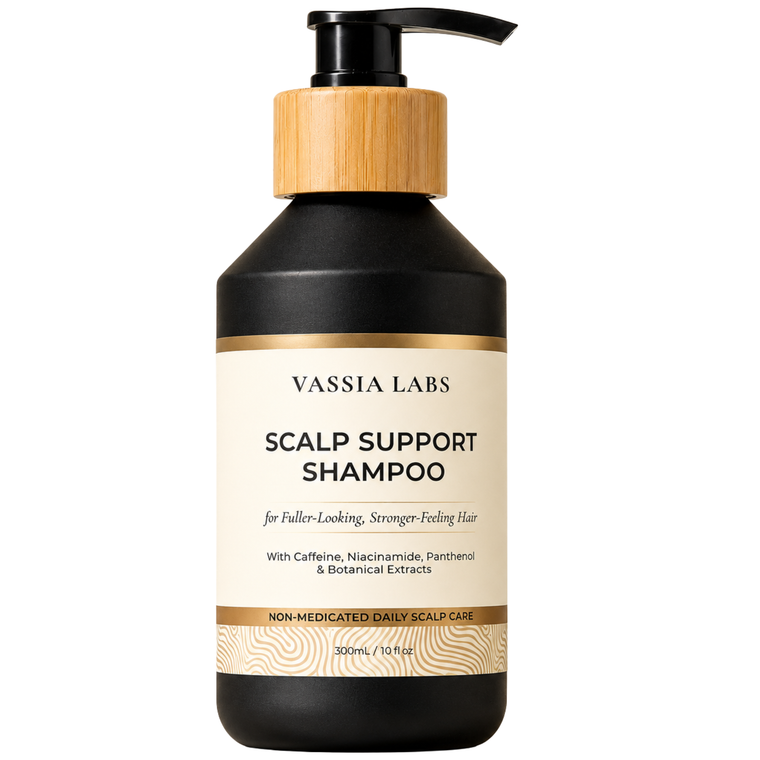
Vassia Labs Scalp Support Shampoo contains rosemary within a fragrance-free, sulfate-free and silicone-free cosmetic formula for fine, flat and thinning-looking hair. It is not presented as a rosemary-based medical hair-loss treatment.
Frequently asked questions
Does rosemary shampoo regrow hair?
Current evidence does not establish that ordinary rinse-off rosemary shampoo reliably regrows hair. The best-known human trial tested rosemary oil as a leave-on treatment.
How long did the rosemary oil study run?
Six months. The study reported no significant increase in mean hair count at three months, which is another reason to resist instant-result marketing.
Should I choose shampoo because it contains rosemary?
Not by itself. Formula weight, cleansing, scalp tolerance and finished-product evidence matter more than one familiar botanical name.