Volumizing shampoo and “hair-growth shampoo” are not the same promise. A volumizing formula aims to make existing hair look and feel fuller by improving cleansing, strand separation, residue and styling behavior. A product claiming to grow new hair is making a much stronger biological claim and needs correspondingly stronger evidence.
Hair-growth shampoo vs volumizing shampoo
| Goal | What shampoo can reasonably do | Evidence threshold | Best next step |
|---|---|---|---|
| More visible root volume | Remove excess oil/residue, avoid heavy deposits and help existing strands separate | Cosmetic performance of the finished formula | Choose a lightweight formula and optimize the routine |
| Thicker-feeling strands | Condition or coat existing fibers in ways that change feel/diameter temporarily | Hair-fiber or finished-product evidence | Judge feel, breakage and residue |
| More follicle density / new growth | Ordinary cosmetic shampoo cannot assume this outcome | Strong human evidence for the exact intervention and appropriate regulatory status | Identify the cause of hair loss and use evidence-based care |
| Less breakage | Support cleansing/conditioning that reduces unnecessary friction | Hair-fiber and finished-formula evidence | Also address heat, tension and detangling |
Why “looks fuller” is not the same as “more hair”
Hair can look much fuller without adding a single follicle. Root direction, oil level, product buildup, strand separation, haircut shape and styling all change how much scalp shows. That is why a good volumizing shampoo can be useful while still being honest about its limits.
For the underlying distinction, read Hair Density vs Thickness vs Volume: What Shampoo Can Actually Change.
What should “hair-growth shampoo” prove?
Be skeptical of a product that cites a study on an oral supplement, injection, prescription drug, leave-on serum or isolated cell culture and then treats that as proof for a rinse-off shampoo. Delivery, dose, contact time and the finished formulation all matter.
For progressive thinning, a widening part, bald patches or sudden heavy shedding, use the Thinning-Looking & Fragile Hair Guide and consider medical evaluation rather than repeatedly changing cosmetics.
How to choose a shampoo when hair looks thin or flat
- Decide whether the main problem is appearance, breakage or true density loss.
- Choose a cleanser that removes oil and residue without leaving the roots heavily coated.
- Keep ingredient claims in proportion to the actual evidence.
- Use conditioner and styling strategically rather than trying to make shampoo perform every job.
- Track persistent density change separately from day-to-day volume.
Commercial bridge: compare before you buy
Use Best Volumizing Shampoo for Fine Hair: What to Look For to compare formulas on cleansing, residue, scalp tolerance, conditioning weight and evidence rather than headline promises.
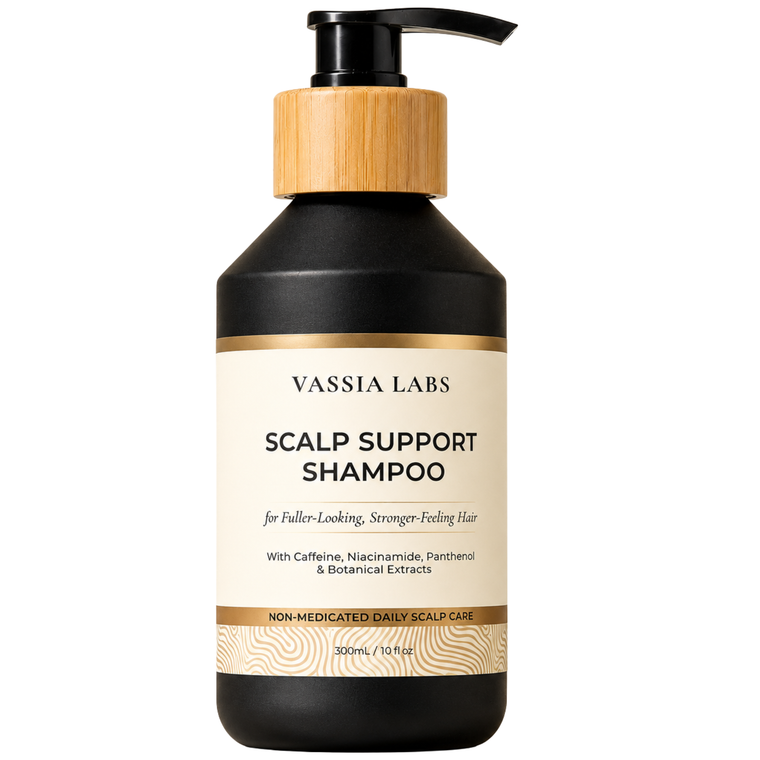
Vassia Labs Scalp Support Shampoo is a fragrance-free, sulfate-free and silicone-free cosmetic shampoo for fine, flat and thinning-looking hair. Its role is lightweight cleansing, manageability and fuller-looking existing hair. It is not presented as a drug or as a treatment for alopecia.
Frequently asked questions
Can volumizing shampoo make hair look fuller?
Yes. By reducing oil/residue and avoiding unnecessary weight, a formula can help existing strands sit with more separation and root lift.
Does that mean it grows new hair?
No. Cosmetic fullness and follicle growth are different outcomes.
Are botanical “growth” ingredients useless?
Not necessarily. Some have interesting evidence, but the relevant question is whether that evidence applies to the finished shampoo, dose and delivery format being sold.