Non-aerosol dry shampoo is not automatically better for fine hair or a sensitive scalp. The delivery format changes how the product is dispensed, but formula, amount used, residue and how often it is washed out matter more than whether it comes from an aerosol can, powder bottle or pump.
Dry shampoo does not actually clean the scalp
Dry shampoo mainly absorbs oil. It does not remove oil, sweat, dead skin and styling residue the way shampoo and water do. The American Academy of Dermatology recommends continuing to wash with regular shampoo and notes that using too much dry shampoo can leave hair dry, stiff or gritty and may irritate the scalp. See the AAD dry-shampoo guidance.
Dry-shampoo formats compared
| Format | What it may make easier | What to watch |
|---|---|---|
| Loose powder | Targeted placement and control over where powder lands | Easy to over-apply; visible residue can be more obvious on some hair colors |
| Pump powder | More controlled dispensing than pouring loose powder | Still creates buildup if repeatedly layered without washing |
| Non-aerosol mist or liquid | May spread differently depending on the formula | “Non-aerosol” does not guarantee fragrance-free, non-irritating or residue-free |
| Aerosol | Fast, broad distribution | Easy to overspray; formula and fragrance still matter |
How to use dry shampoo on fine hair
- Use it on dry hair. Apply only where oil is visible rather than coating the whole head automatically.
- Start with less. You can add more, but removing an overloaded layer is much harder.
- Give the product time according to its label. Different formulas are designed differently, so there is no universal 30-second or 60-second rule.
- Blend gently. Avoid aggressive scratching or scrubbing.
- Wash it out regularly. The AAD suggests washing hair with shampoo and water after one or two dry-shampoo uses rather than continuously layering more product.
Signs you may be using too much
- Roots feel gritty, stiff or unusually coated.
- Visible powder remains after blending.
- The scalp becomes itchy or irritated.
- Hair tangles or breaks more easily.
- Fine roots become flatter despite using a product intended to refresh them.
If the scalp is painful, inflamed, persistently itchy or developing sores, stop treating it as a styling problem and seek appropriate medical advice.
Commercial bridge: dry shampoo is a bridge between washes, not the wash
If you rely on dry shampoo because fine roots become oily or flat quickly, read Does Dry Shampoo Cause Scalp Build-Up or Irritation? and the Complete Guide to Fine Hair. Those explain how wash frequency, buildup and root lift fit together.
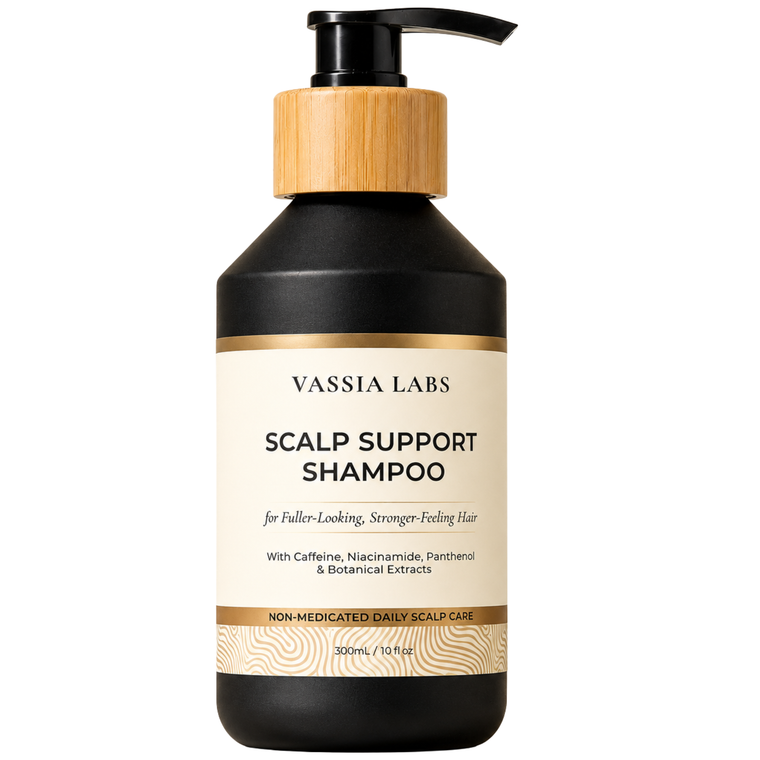
When it is time to actually cleanse, Vassia Labs Scalp Support Shampoo is a fragrance-free, sulfate-free and silicone-free cleanser for fine, flat and thinning-looking hair. It removes oil and everyday residue with shampoo and water; it is not a dry shampoo or medicated scalp treatment.
Frequently asked questions
Is non-aerosol dry shampoo safer for a sensitive scalp?
Not automatically. Check the full ingredient list and your own tolerance. A non-aerosol format can still contain ingredients that irritate an individual scalp.
Can dry shampoo replace washing?
No. It absorbs oil but does not clean the scalp the way shampoo and water do.
How often should I wash out dry shampoo?
The AAD advises washing with shampoo and water after one or two dry-shampoo uses rather than layering it indefinitely.