Major emotional or psychological stress can be followed by increased hair shedding, and the change may not show up until a few months later. The American Academy of Dermatology (AAD) lists major stress as one possible trigger for excessive shedding, often called telogen effluvium.
The delay can make the connection easy to miss. Hair may begin shedding after the stressful period has eased, because more hairs were shifted into the resting phase and only later reached the point where they release.
What does stress-related shedding usually look like?
Telogen effluvium is typically diffuse. You may notice more full-length hairs during washing or brushing and a temporary reduction in overall fullness rather than one sharply defined bald patch.
That is different from breakage, which produces shorter snapped pieces, and from progressive patterned thinning, which can show up as a widening part or steadily smaller ponytail.
How soon after stress can shedding begin?
The AAD says excessive shedding often becomes noticeable a few months after a triggering event. There is no useful universal countdown because the intensity and duration of the trigger, overall health and individual hair-cycle timing vary.
If the trigger resolves, normal fullness often returns over time. The AAD notes that many people see fullness return within roughly six to nine months after the body readjusts, although ongoing stress or another cause can prolong the pattern.
What can you do while it settles?
- Keep your hair-care routine simple. Constantly changing products will not correct the internal trigger and can make irritation or buildup harder to identify.
- Reduce avoidable breakage. Use gentler detangling, lower effective heat and less tension from tight styles.
- Wash according to scalp needs. Shampooing makes loose hairs visible, but it does not create telogen effluvium.
- Track trends monthly. Consistent photos of the part and crown are more useful than counting individual strands after every shower.
- Look at the whole timeline. Illness, surgery, childbirth, rapid weight change and medication changes can overlap with emotional stress.
Could it be something other than stress?
Yes. Stress is common, which makes it very easy to blame for every hair change. Female-pattern hair loss, nutritional issues, illness, medication changes, scalp disease and breakage can occur at the same time.
A progressively widening part, smooth patches, significant scalp symptoms or continued worsening should not be written off as stress without assessment.
Where shampoo fits
A cosmetic shampoo can remove oil and residue, help fine strands separate at the roots and make existing hair look fuller. It cannot reverse the physiologic trigger behind telogen effluvium or treat a medical hair-loss disorder.
The Complete Guide to Thinning-Looking & Fragile Hair explains how to distinguish shedding, breakage, cosmetic flatness and progressive density change.
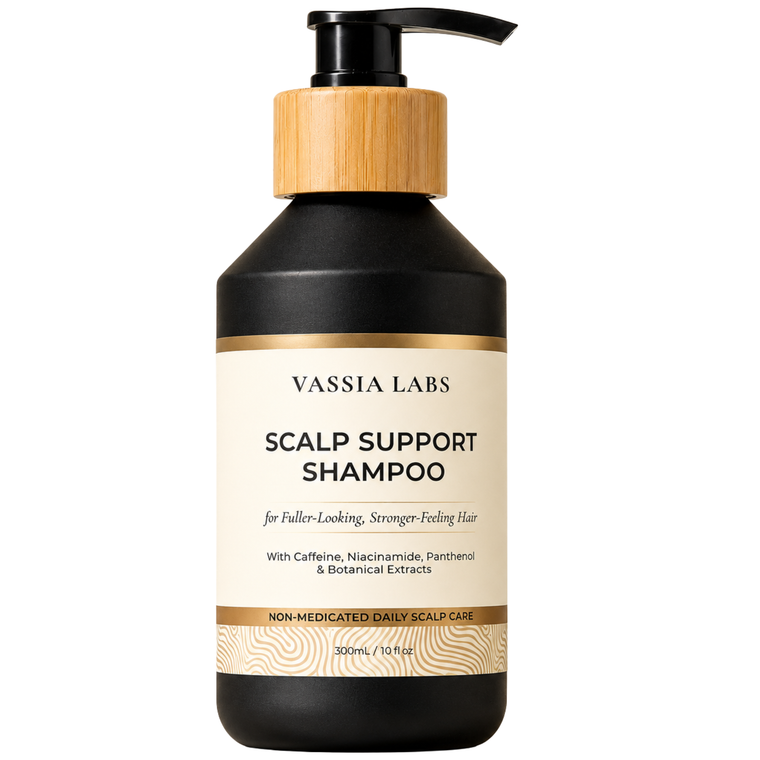
Vassia Labs Scalp Support Shampoo is a non-medicated fragrance-free, sulfate-free and silicone-free cleanser for fine, flat and thinning-looking hair. It can support lightweight cleansing and fuller-looking wash days; it is not a treatment for stress-related shedding.
When should you see a dermatologist?
Arrange professional assessment for persistent or worsening heavy shedding, a progressively widening part, a clearly smaller ponytail, smooth patches, scalp pain or burning, heavy scale, sores, scarring or another unexplained change in density.
Frequently asked questions
Can emotional stress really cause hair shedding?
Major stress is one recognized trigger for temporary excessive shedding. The AAD includes it among common causes of telogen effluvium.
Why can shedding start after the stressful period?
The hair cycle creates a delay between the trigger and the time more hairs become visible in the shedding phase.
Should I wash less while I am shedding?
Not simply to avoid seeing loose hairs. Use a wash frequency that keeps your scalp comfortable and handle the hair gently.