Yes. A major illness, high fever, surgery or another significant physical stressor can be followed by increased hair shedding a few months later. This delayed shedding is commonly called telogen effluvium. The timing can feel confusing because the hair may begin shedding after you otherwise feel recovered.
The American Academy of Dermatology (AAD) lists high fever, surgery and recovery from illness among common triggers for excessive shedding. The pattern is often temporary, but persistent or progressive loss still deserves evaluation.
Why can shedding start after you recover?
Hair follicles cycle through growth, transition, resting and shedding phases. A major physical stressor can shift more hairs toward the resting/shedding part of the cycle. Because that cycle takes time, the visible increase is delayed rather than immediate.
This is why someone may recover from an infection or operation and only later start seeing more hair in the shower.
What does stressor-related shedding usually look like?
Temporary telogen effluvium is usually described as diffuse shedding rather than one sharply defined bald patch. You may notice more loose hairs during washing, brushing or styling and a temporary reduction in overall fullness.
It should not automatically be used to explain every form of hair loss. Patchy loss, progressive patterned thinning or significant scalp symptoms can point to a different process.
What should you do first?
- Build a simple timeline. Note major illness, fever, surgery, childbirth, rapid weight change, major stress and medication changes from the preceding months.
- Watch the density, not only the drain. Compare the part, crown and ponytail under consistent conditions.
- Reduce avoidable shaft damage. Use gentler detangling, lower effective heat and less tension while the hair feels fragile.
- Keep the scalp clean and comfortable. Avoiding shampoo does not keep a telogen hair attached indefinitely.
- Seek assessment if the pattern is unusual or persistent. Do not assume every new change comes from an old illness.
Can nutrition matter after illness?
Recovery from illness can coincide with appetite changes, weight loss or nutritional issues, but guessing at deficiencies is not a reliable solution. If your diet changed substantially or you have other symptoms, discuss that history with a qualified healthcare professional rather than self-prescribing high-dose supplements.
What shampoo can and cannot do
A shampoo can remove oil, sweat and styling residue and help fine strands look more separated and lifted. Gentle handling during washing can also reduce avoidable breakage.
Shampoo cannot reverse the internal trigger that moved hairs into the shedding phase. If the concern is true density loss, the cause matters more than the marketing language on the bottle.
Use the Complete Guide to Thinning-Looking & Fragile Hair to separate shedding from breakage and cosmetic flatness.
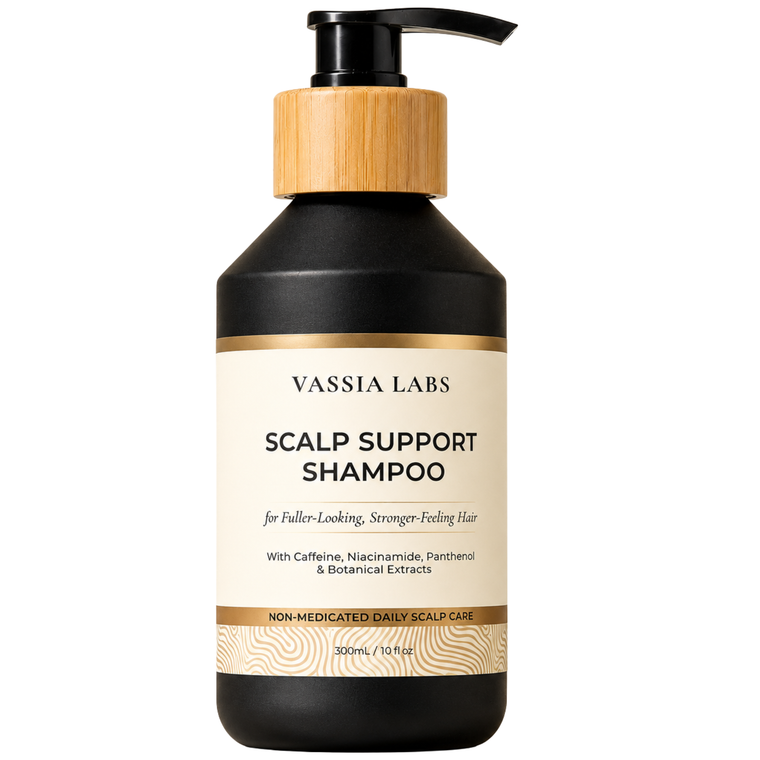
Vassia Labs Scalp Support Shampoo is a fragrance-free, sulfate-free and silicone-free cosmetic shampoo designed for fine, flat and thinning-looking hair. It can support cleansing and fuller-looking wash days; it is not a treatment for telogen effluvium.
When to see a dermatologist
Arrange professional assessment for shedding that remains heavy or keeps worsening, a progressively widening part, clearly shrinking ponytail, smooth bald patches, scalp pain or burning, heavy scale, sores, scarring, or another unexplained change in density.
Frequently asked questions
Can COVID, flu or another fever cause hair shedding?
A high fever or recovery from illness can be a trigger for excessive shedding. A clinician can help determine whether that explanation fits your timing and pattern.
Why does the shedding start months later?
The hair cycle creates a delay between the stressor and the time more hairs become visible in the shedding phase.
Should I wash less while my hair is shedding?
Not simply to avoid seeing loose hairs. Use a wash frequency that keeps your scalp comfortable and focus on gentle handling.
Does illness-related shedding always grow back?
Temporary telogen effluvium often improves when the trigger has resolved, but a persistent or progressive change should be assessed rather than assumed to be temporary.