Direct answer: swimming-pool exposure can leave fine hair feeling rough, tangled, coated or difficult to style. But the famous green tint seen in blonde or light hair is primarily associated with copper in pool water, not chlorine pigment magically turning the hair green.
For fine hair, the best routine is practical: reduce how much pool water stays in the hair, rinse after swimming, condition the lengths appropriately and choose regular, clarifying or chelating cleansing based on what you actually need to remove.
After-swim cleansing: what should you use?
| What you notice | Best starting point | Why |
|---|---|---|
| Normal pool smell and ordinary oil | Regular lightweight shampoo | Usually enough for routine cleansing |
| Heavy product or repeated pool residue | Clarifying shampoo as needed | Targets heavier residue when regular washing is no longer enough |
| Green cast or suspected metal deposition | Chelating formula | Designed to bind metal ions such as copper |
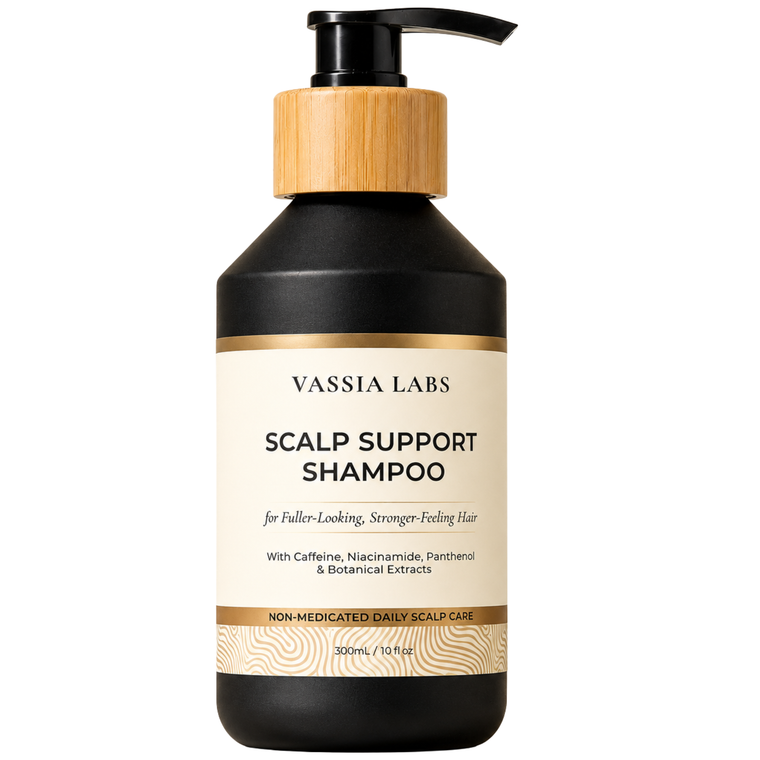
| Fine roots that flatten easily between swims | Vassia Labs for regular wash days | Lightweight, fragrance-free cleansing without a heavy silicone finish |
Does chlorine turn hair green?
Not by itself in the way the common explanation suggests.
Published medical literature on “green hair” describes copper as the characteristic source of green discoloration. Copper can be present in pool or domestic water and can deposit on hair. Light, porous or previously damaged hair may show the color more visibly.
Chlorinated pool conditions can still contribute to hair weathering and dryness, and pool chemistry can influence metal behavior. But when hair turns green, “chlorine dyed it” is an incomplete explanation.
Why is fine hair affected so visibly?
Fine strands have less physical bulk, so small changes in surface condition can become obvious quickly.
After repeated swimming you may notice:
- roots that feel coated
- lengths that feel rougher
- more tangling
- less movement or volume
- color changes on light or bleached hair
- more difficulty getting the hair to feel clean with the normal routine
Bleached or heavily processed hair may be more porous and weathered, which can increase susceptibility to visible mineral deposition and surface damage.
What should you do before swimming?
A swim cap provides the most direct physical barrier, although no cap keeps every drop of water out.
Wetting the hair with fresh water before entering a pool is a common low-risk strategy because already-wet hair has less capacity to take up additional water immediately. It is reasonable as a practical step, but it should not be advertised as an impenetrable chemical shield.
If you use conditioner before swimming, keep it lightweight on fine hair and check pool rules because some facilities discourage products that wash into the water.
What should you do immediately after swimming?
- Rinse promptly with fresh water. Do not let pool water remain on the hair longer than necessary.
- Wash when needed. If the hair smells strongly of pool water, feels coated or has been exposed for a long session, shampooing is reasonable.
- Condition the lengths. Focus on mid-lengths and ends if the roots flatten easily.
- Detangle gently. Wet, weathered hair is not the time for comb-based vengeance.
Do you need a clarifying shampoo after every swim?
No.
A regular shampoo may be enough after occasional swimming. Clarifying formulas are useful when ordinary shampoo is not removing accumulated styling residue, oils or pool-related deposits satisfactorily.
Using a strong clarifier after every short swim can be excessive for fragile or color-treated lengths.
When do you need a chelating shampoo?
Chelating products are designed specifically to bind certain metal ions so they can be removed more effectively.
They become more relevant when you are dealing with hard-water minerals or suspected metal deposition rather than ordinary oil and styling residue.
If light hair develops a green cast after swimming, metal deposition is a more logical issue to investigate than simply increasing ordinary shampoo strength.
Read Clarifying vs Chelating vs Regular Shampoo for the distinction.
Swimming versus hard water
Both can expose hair to dissolved minerals, but they are not identical problems.
Hard water is defined primarily by higher calcium and magnesium concentrations. Pool water has different chemistry and may include disinfectants and trace metals such as copper.
For the household-water side, read Hard Water and Hair: What the Evidence Really Says.
Can you use Vassia Labs after swimming?
Yes, as a regular cosmetic cleanser.
Vassia Labs Volumizing Shampoo is designed to remove ordinary oil and everyday residue while leaving fine hair lightweight. It is not marketed as a specialized chelating treatment for copper or hard-water metal removal.
If normal washing leaves your hair clean and comfortable after swimming, there is no reason to escalate the routine. If you develop persistent mineral coating or discoloration, a dedicated chelating product may be more appropriate for that job.
What about color-treated hair?
Color-treated and bleached hair can already have altered surface structure, so repeated pool exposure may be more noticeable. Reduce unnecessary friction, use appropriate conditioning and avoid piling strong cleansing, high heat and chemical processing onto the same day when you can help it.
Our UV Protection for Fine and Color-Treated Hair guide covers the other half of the summer problem.
Decision tree for swimmers with fine hair
One normal swim and hair feels fine? → Rinse, then use your regular shampoo when needed.
Hair stays coated after normal washing? → Consider clarifying.
Blonde or light hair develops a green cast? → Investigate copper and use a targeted chelating approach.
Your main ongoing problem is flat, fine roots? → Keep a lightweight everyday shampoo such as Vassia as the base routine rather than using a specialist cleanser every wash.
Frequently asked questions
Why did my blonde hair turn green after swimming?
Copper deposition is a classic cause. Light or damaged hair shows the color particularly clearly.
Does chlorine make hair dry?
Repeated pool exposure can contribute to a rougher, drier hair feel. The effect depends on exposure, hair condition and pool chemistry.
Should I wash fine hair after every swim?
Wash when the scalp and hair need it. Rinsing promptly is useful after every swim; shampooing frequency can depend on session length, pool exposure, oiliness and hair condition.
Can regular shampoo remove copper?
It may remove some surface residue, but chelating formulas are specifically designed to bind metals and are better suited to significant metal deposition.
Is Vassia Labs a swimmer's chelating shampoo?
No. It is a regular lightweight volumizing and scalp-support shampoo, not a dedicated chelator.
Sources and further reading
- PubMed literature on green hair, copper and swimming pools
- Hard Water and Hair: What the Evidence Really Says
LEARN → COMPARE → SHOP
Choose the right everyday shampoo between specialist treatments
Clarifying and chelating products solve specific problems. Your regular shampoo still needs to keep fine roots clean, light and full.
Compare the best shampoos for fine thin hair →

Clean roots. Fuller hair. No heavy finish.
Vassia Labs is a fragrance-free, sulfate-free and silicone-free everyday option for fine, flat hair.