Direct answer: yes. Ultraviolet and visible radiation can contribute to protein loss, color change, surface roughness and reduced mechanical quality in the hair shaft. Reviews of human-hair photodamage consistently describe UV exposure as a source of hair weathering, although the exact effect varies with wavelength, hair color, prior damage and exposure.
The scalp and hair need to be treated differently. The exposed scalp is living skin and should receive normal sun protection. The hair shaft is non-living keratin, so “protection” means reducing further photochemical weathering rather than preventing a sunburn inside the strand.
What does UV exposure do to hair?
Published research describes two major effects:
- Protein damage: UV exposure can increase protein loss and alter structural components of the hair fiber.
- Color change: natural and artificial pigments can change with radiation exposure, with lighter hair often showing more visible color effects.
A 2004 study of multiple hair colors found substantial increases in protein loss after UV and sunlight exposure and significant color changes across the tested hair types. A later review described solar radiation as affecting color, mechanical properties, luster, protein content and surface roughness.
That does not mean one afternoon outside will destroy healthy hair. Photodamage is cumulative and interacts with bleaching, dyeing, heat, friction and the existing condition of the strand.
Why fine and color-treated hair can show damage quickly
Fine hair has less physical bulk, so changes in surface roughness, breakage and product buildup can become visually important quickly.
Color-treated or bleached hair has already undergone chemical processing, so additional environmental weathering may be more noticeable through:
- fading or brassiness
- roughness
- reduced shine
- more tangling
- greater breakage during grooming
The goal is therefore to reduce avoidable cumulative exposure rather than expecting one serum to make hair immune to sunlight.
Protect the scalp as skin
If the scalp is exposed along a part, thinning area or bald spot, protect it like other exposed skin.
The American Academy of Dermatology recommends a broad-spectrum, water-resistant SPF 30 or higher on exposed skin and specifically notes that people with thinning hair can apply sunscreen to the scalp or wear a wide-brimmed hat. Reapply according to the sunscreen directions, including after swimming or sweating.
A hat provides useful physical protection and avoids putting sunscreen directly through the hair. A tightly woven or UPF-rated wide-brimmed hat also protects areas such as the ears and neck better than a small cap.
Do hair UV sprays replace scalp sunscreen?
No.
Hair products marketed with UV filters are cosmetic products for the hair fiber. They should not be assumed to provide the tested skin protection of an SPF sunscreen unless they are specifically regulated and labeled for skin use.
If your scalp is exposed, use sunscreen or physical coverage for the scalp itself.
Do hair UV products help the hair shaft?
They may.
Reviews of hair photoprotection describe cosmetic approaches that use UV filters, antioxidants, silicones or conditioning agents to reduce some of the visible or measurable effects of radiation on hair.
The evidence and efficacy vary by product. Follow the directions of the specific hair product rather than treating “UV shield” as a standardized protection rating equivalent to SPF.
A practical sun routine for fine hair
- Use physical protection when exposure will be prolonged. Shade and a suitable hat reduce the amount of radiation reaching both scalp and hair.
- Protect exposed scalp skin. Use broad-spectrum, water-resistant SPF 30+ according to label directions.
- Keep the hair routine lightweight. Use only as much UV spray, serum or conditioner as fine hair needs.
- Condition weathered lengths. Reducing friction helps hair tolerate brushing and styling more comfortably.
- Use controlled heat afterward. Avoid combining prolonged sun exposure with unnecessarily aggressive drying or hot tools.
For lower-damage drying, read How to Dry Fine Hair With Less Breakage.
What should you do after swimming?
Rinse the hair with fresh water after pool or salt-water exposure. Pool-related green discoloration in light hair is classically associated with copper deposition, not simply “chlorine damage.”
Normal shampoo may be enough after occasional swimming. Clarifying or chelating products become more relevant when there is heavier residue or metal deposition.
Use Swimming With Fine Hair: Chlorine, Copper & Buildup for the full routine.
Does shampoo reverse sun damage?
No.
Shampoo removes oil and residue. Conditioner and other cosmetic treatments can improve softness, slip, shine and manageability, but a weathered hair fiber does not biologically regenerate.
That is why prevention and lower-friction care are more realistic than “repair” language that implies a strand has become living tissue again.
Do you need a weekly deep-conditioning schedule?
No fixed schedule applies to everyone.
Use richer conditioning when your lengths are actually rough, tangled or chemically processed enough to benefit from it. Fine hair can become flat when masks and oils are used more often or more heavily than necessary.
If your hair feels soft but suddenly loses all volume, read Can Fine Hair Be Over-Conditioned?.
Where Vassia Labs fits
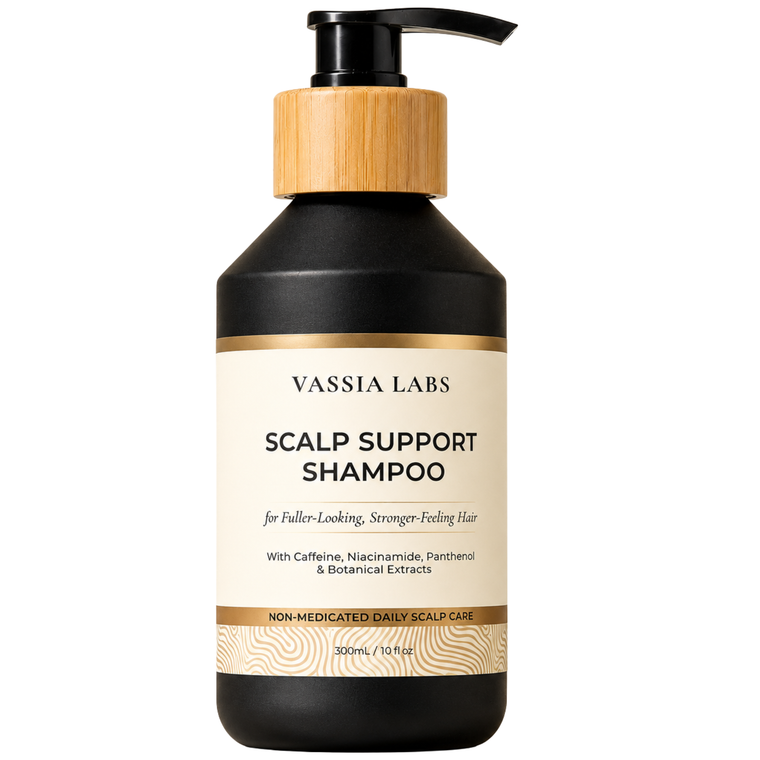
Vassia Labs Volumizing Shampoo is a lightweight cosmetic cleanser for fine, flat and thinning-looking hair. It does not claim to reverse UV damage or act as sunscreen.
Its role after outdoor exposure is ordinary cleansing: remove oil, sweat and everyday residue while leaving the roots lightweight enough for fine hair.
Frequently asked questions
Can sunlight fade hair color?
Yes. UV and visible radiation can contribute to pigment changes in both natural and color-treated hair.
Does hair get sunburned?
The hair shaft does not sunburn like living skin. It can undergo photochemical damage and weathering. The scalp itself can burn and needs normal skin sun protection.
Should I put sunscreen on my scalp?
If the scalp is exposed, the AAD recommends sunscreen or physical coverage such as a wide-brimmed hat. Use broad-spectrum, water-resistant SPF 30 or higher.
Does a UV hair spray equal SPF 30?
Do not assume so. Hair UV products and skin sunscreens are different categories unless the product is specifically tested and labeled as a sunscreen for skin.
Can Vassia Labs repair sun-damaged hair?
No permanent repair claim is made. It can cleanse the scalp and hair as part of a gentle routine, while conditioning and lower-damage styling can improve how weathered hair feels and behaves.