Seeing more hair in your brush does not automatically mean you are developing permanent hair loss. A brush can collect hairs that were already released, especially if you brushed less often than usual, wore your hair tied up, or went longer between wash and detangling sessions. Hair breakage can also add shorter pieces to the brush.
The more useful question is whether this is a temporary change in what you are seeing or part of a persistent change in shedding, density, part width or hairline.
Why might there suddenly be more hair in your brush?
Several ordinary factors can make the amount in a brush look larger from one day to the next:
- You brushed less often. Loose hairs can remain caught between neighboring strands and then appear together during the next thorough brushing session.
- You went longer between washes. Already-released hairs can accumulate before washing and detangling make them visible.
- Your hair is longer. A small number of long strands can look like a surprisingly large amount of hair.
- You changed your hairstyle. Buns, ponytails and other styles can hold loose hairs until the style is removed.
- Some of what you see may be breakage. Fragile strands can snap during brushing, heat styling, bleaching, coloring or repeated friction.
- Your actual shedding may have increased. Illness, childbirth, major stress and other factors can sometimes be associated with excessive shedding.
The American Academy of Dermatology notes that people may notice more hairs than usual on a pillow or hairbrush during periods of excessive shedding, and that hair loss has many possible causes. Read the AAD overview of hair shedding and its guide to common causes of hair loss.
Is it shedding or breakage?
Shedding happens when a whole hair strand has been released from the follicle. Breakage happens when the hair shaft snaps somewhere along its length.
That distinction matters because a brush can contain both.
- Full-length strands are more consistent with shedding.
- Shorter pieces of different lengths can suggest breakage.
- A brush full of hair after several days without brushing may partly reflect accumulated loose strands.
- An increase in short broken pieces alongside roughness, split ends or heat damage points more toward a mechanical hair-care problem.
Our detailed guide to hair shedding vs. hair breakage explains the differences in more detail.
Can brushing itself cause more hair to come out?
Brushing can release hairs that were already loose, but rough or excessive brushing can also damage the hair shaft.
The American Academy of Dermatology recommends gentle brushing and notes that many hair types are more vulnerable to breakage when wet. It also advises against unnecessary repeated brushing because mechanical stress can contribute to split ends and breakage. See the AAD guidance on styling hair without damage.
That does not mean you should be afraid to brush your hair. The practical goal is simply to detangle with the minimum force needed.
How to tell whether the change matters
One unusually full hairbrush is weak evidence by itself. Look for patterns instead.
- Compare similar routines. A brush after three days without detangling should not be compared with a brush used several times in one day.
- Watch density rather than individual piles. Notice whether your part appears progressively wider, your ponytail feels consistently smaller, or the scalp is becoming more visible over time.
- Look at strand length. Many shorter fragments may point toward breakage rather than whole-strand shedding.
- Think about recent changes. Illness, childbirth, major stress, rapid weight change, medication changes or a major shift in hair-care practices can be relevant context.
- Pay attention to scalp symptoms. Persistent pain, marked redness, inflammation, scaling or other significant scalp changes should not be dismissed as a simple brushing issue.
What is considered normal shedding?
The AAD states that it is normal to shed roughly 50 to 100 hairs per day, but trying to count every strand is usually less useful than observing whether your normal pattern has clearly changed. See the AAD guidance on normal hair shedding.
Daily appearance also depends on how often you wash, brush and detangle. If loose hairs accumulate for several days, the next brush or shower can make them appear all at once.
For that reason, compare your hair under similar conditions rather than treating every brushful as a laboratory measurement.
What should you do if the brush suddenly looks much fuller?
- Detangle gently from the ends upward rather than pulling through knots from the roots.
- Avoid increasing heat, bleach or tight styling while you are trying to understand the change.
- Keep wash and brushing routines reasonably consistent for a while so comparisons are meaningful.
- Take occasional photographs of your part or hairline in similar lighting if you are concerned about density changes.
- Do not start multiple hair-growth supplements or treatments simply because of one dramatic brushful.
If you notice more hair specifically after delaying wash day, see Why Does Hair Shed More After Not Washing for Several Days?.
Where does shampoo fit?
Shampoo removes oil, sweat and product residue. It can make hair easier to manage and reduce the buildup that makes fine hair feel heavy, but a cosmetic shampoo cannot diagnose or treat the medical cause of unexplained hair loss.
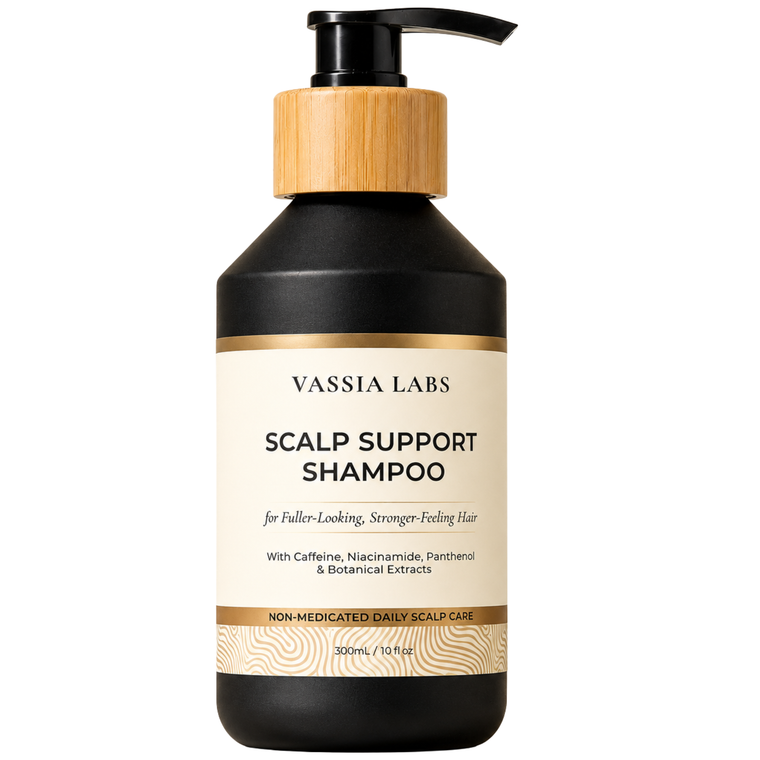
For people whose main cosmetic concerns are fine strands, flat roots, buildup and thinning-looking hair, Vassia Labs Volumizing Shampoo for Fine, Flat & Thinning Hair is designed for lightweight cleansing without added fragrance, sulfates or silicones. It is a non-medicated cosmetic product, not a treatment for alopecia.
When should you seek professional evaluation?
The AAD emphasizes that hair loss can have many causes and that knowing the cause matters when treatment is needed. Read the AAD overview of why hair falls out.
Consider appropriate professional assessment when you notice:
- a persistent increase in shedding rather than a one-off change
- a progressively widening part or clearly decreasing density
- smooth bald patches
- a rapidly changing hairline
- persistent scalp pain, inflammation or significant irritation
- loss of eyebrows, eyelashes or other body hair
- a substantial change after illness, childbirth, medication changes or another health event
Frequently asked questions
Why is there suddenly so much hair in my brush?
It may reflect accumulated loose strands, less frequent brushing, a longer gap between washes, breakage, or a genuine increase in shedding. The most useful clue is whether the change persists and whether overall hair density is changing.
Can not brushing for a few days make it look like I am losing more hair?
Yes. Loose hairs can remain caught among neighboring strands and then appear together when you brush again.
Does hair in my brush mean my hair is thinning?
Not necessarily. A brush shows hairs that became visible during brushing, not your total hair density. A progressively widening part, smaller ponytail or persistent reduction in density is more informative.
Can brushing wet hair cause breakage?
For many hair types, wet hair can be more vulnerable to breakage, so gentle handling matters. Tightly curled or textured hair may be easier and less damaging to detangle while wet, so technique should suit the hair type.
Should I count the hairs in my brush?
Usually, consistent observation is more useful than exact counting. Compare similar routines and look for persistent changes in shedding and density rather than reacting to one brushful.