Postpartum hair shedding is common, but not every hair change after pregnancy should automatically be dismissed as “normal.” A typical postpartum pattern is diffuse shedding that becomes noticeable a few months after birth, often peaks around four months and gradually improves as the hair cycle resets.
Patchy loss, scalp pain, scarring, ongoing worsening or hair changes accompanied by other unexplained symptoms do not fit neatly into the usual postpartum-shedding story and deserve professional assessment.
What is considered a typical postpartum shedding pattern?
The American Academy of Dermatology (AAD) explains that falling estrogen levels after childbirth can trigger excessive shedding, called telogen effluvium. The extra shedding may look dramatic because many hairs enter a similar stage of the cycle around the same time.
Typical features include:
- diffuse shedding rather than one smooth bald patch
- more loose hair during washing or brushing
- onset a few months after delivery rather than immediately
- a peak commonly around four months postpartum
- gradual improvement over time
The AAD says most women regain their normal hair fullness by their child’s first birthday.
What does not fit the usual postpartum pattern?
Arrange medical assessment when you notice signs such as:
- smooth or expanding bald patches
- a part that continues to widen
- a ponytail that keeps getting smaller
- scalp pain, burning, sores, thick scale or scarring
- eyebrow or body-hair loss
- continued worsening without a clear trend toward recovery
- other unexplained symptoms such as marked fatigue or significant systemic changes
Pregnancy and the postpartum period can overlap with other causes of hair loss. A clinician can take a history, examine the scalp and decide whether testing is appropriate.
Shedding, breakage and flatness can happen together
Not every short hair is new growth, and not every visible scalp area is proof of follicle loss. Heat, chemical processing, friction and tight styles can break strands. Oil and product buildup can make fine roots clump together and expose more scalp.
For a practical breakdown, read Hair Shedding vs Hair Breakage.
What can you safely do at home?
- Keep the scalp clean according to your normal needs. Avoiding washing does not prevent hairs that have entered the shedding phase from eventually releasing.
- Reduce avoidable breakage. Use gentle detangling, lower effective heat and less tension from tight ponytails, braids or extensions.
- Condition the lengths, not automatically the roots. Fine hair often keeps more lift when heavy conditioning is concentrated below the scalp.
- Photograph monthly under similar conditions. Consistency is more useful than daily checking in different light.
- Escalate unusual patterns. Do not keep changing products when the pattern is progressive, patchy or symptomatic.
Where shampoo fits
Shampoo can cleanse oil and residue, improve the way fine strands separate at the roots and make existing hair look fuller. It cannot stop the hormonal trigger behind postpartum telogen effluvium or diagnose a different hair-loss condition.
The Complete Guide to Thinning-Looking & Fragile Hair explains the difference between cosmetic thinness, shedding, breakage and true density change.
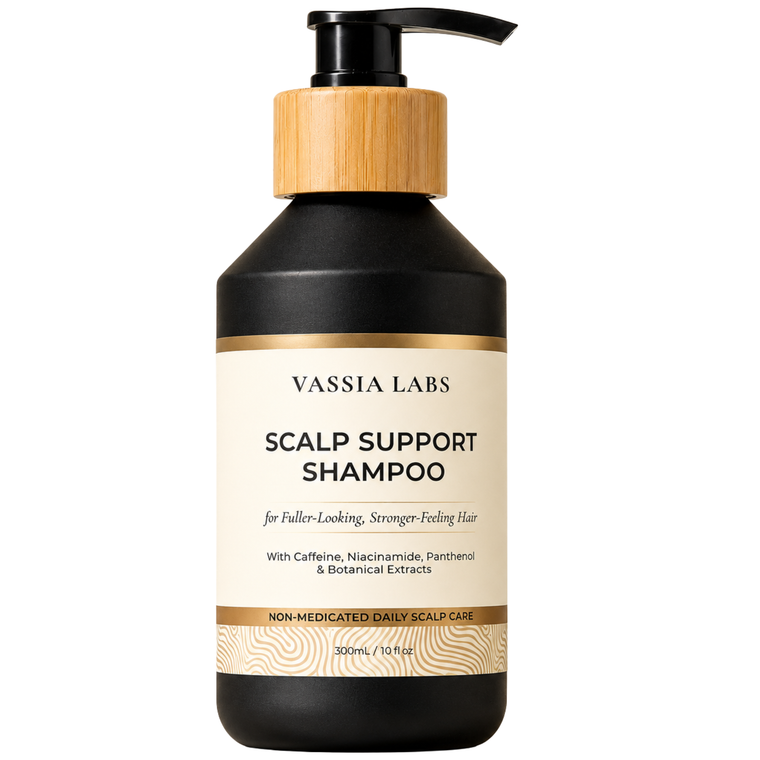
If you want a lightweight cosmetic cleanser, Vassia Labs Scalp Support Shampoo is fragrance-free, sulfate-free and silicone-free and designed for fine, flat and thinning-looking hair. It is not a medical treatment for postpartum hair loss.
Frequently asked questions
Is postpartum shedding permanent?
It is usually temporary. The AAD says most women regain their normal hair fullness by their child’s first birthday.
Can postpartum shedding expose more scalp?
Yes. Diffuse shedding can temporarily reduce coverage, and fine roots can also look more separated or more clumped depending on oil, styling and wash timing.
Should I take supplements for postpartum shedding?
Do not assume a supplement is needed. Nutritional needs and deficiencies should be discussed with a qualified healthcare professional, especially during the postpartum period.
Can shampoo fix postpartum hair loss?
No cosmetic shampoo can correct the postpartum hormonal trigger. A suitable shampoo can improve cleansing, root lift and the appearance of existing hair.