Direct answer: choose a volumizing shampoo when fine hair is mainly losing fullness because roots are flat, oily, coated or weighed down. Choose a thickening shampoo when your main goal is to make individual strands feel more substantial. For most fine, flat hair, lightweight volume is the better first priority because adding more coating can make the roots collapse.
The categories can overlap. A well-designed formula can clean lightly enough for root lift while using ingredients such as panthenol or hydrolyzed protein to support stronger-feeling, fuller strands.
If you are already ready to compare products rather than categories, go directly to our best shampoo for fine thin hair comparison.
Volumizing vs thickening shampoo: quick comparison
| Question | Volumizing shampoo | Thickening shampoo |
|---|---|---|
| Main goal | Reduce weight and improve visible lift | Make strands feel or appear more substantial |
| Best for | Flat roots, oily fine hair, buildup | Fine strands that feel fragile or insubstantial |
| Common approach | Lightweight cleansing and low residue | Proteins, polymers or body-building ingredients |
| Main fine-hair risk | Over-cleansing if poorly balanced | Too much coating or stiffness |
| Can it create new follicles? | No | No |
What does volumizing shampoo actually do?
Volumizing shampoo is primarily about helping existing hair look less weighed down.
Common ways it can support volume include:
- removing scalp oil that causes roots to collapse
- washing away dry shampoo and styling residue
- rinsing without leaving a heavy conditioning film
- helping individual strands separate instead of clumping together
- leaving the roots light enough to respond better to blow-drying or styling
That is why volume can improve immediately after a good wash. You have not suddenly grown more hair. Existing strands are simply cleaner, more separated and less attached to the scalp by oil and product weight.
If your roots are the main problem, read Shampoo for Flat Roots: The Fine-Hair Buying Checklist.
What does thickening shampoo actually do?
“Thickening” is a broader marketing term. In cosmetic hair care, it usually means making strands feel or appear more substantial rather than permanently increasing biological strand diameter.
A thickening shampoo may use ingredients such as:
- hydrolyzed proteins
- conditioning polymers
- film-forming ingredients
- humectants
- texturizing agents
These can change the feel, surface behavior or temporary body of the hair shaft.
That can be useful for fine, fragile hair. The trade-off is that fine strands do not tolerate unlimited coating. If a thickening formula leaves too much material behind, the hair may feel more substantial while the roots look flatter.
Fine hair changes the decision
Fine hair refers to the diameter of each individual strand. It is different from thin hair, which usually refers to lower overall density.
You can have fine hair with high density, coarse hair with low density, or fine and thin hair at the same time. This distinction matters because shampoo can influence appearance, texture and manageability, but it cannot create new follicles.
If you are not sure which issue you have, start with Fine Hair vs Thin Hair: The Difference Changes Your Routine.
Choose volumizing shampoo if your roots get flat quickly
Fine roots are easily affected by small amounts of oil and residue. Hair that looks airy in the morning can lose visible volume by afternoon because strands begin grouping together.
A volumizing formula makes the most sense when you regularly notice flat roots soon after washing, greasy-looking roots within a day, hair that feels coated after conditioner, volume that improves after clarifying, dry-shampoo or styling buildup, or soft hair that lacks movement.
In that situation, adding even more coating in the name of thickening can be counterproductive.
For the mechanics of this problem, see What Makes a Shampoo Lightweight?.
Choose a thickening approach if the strands feel fragile or insubstantial
Some fine hair needs more than oil removal. Bleaching, heat styling, friction and normal weathering can leave strands rough, fragile or difficult to manage.
Ingredients such as hydrolyzed proteins and panthenol can be useful because they support the cosmetic feel of the hair without pretending to alter follicle biology.
A good thickening-oriented formula should still rinse cleanly. The goal is temporary body and better strand feel, not a coating so heavy that every root files for gravity-related bankruptcy.
Can protein help fine hair look fuller?
Hydrolyzed proteins can deposit on or interact with the hair surface and may help fine hair feel more substantial, smooth or manageable.
That does not mean more protein is always better. Hair that becomes stiff, rough or difficult to detangle may be getting more strengthening treatment than it needs.
Fine hair tends to respond best to balance: enough conditioning and structural support to reduce roughness, but not so much product that movement disappears.
For a deeper comparison, read Bond Repair vs Protein Treatment for Fine, Fragile Hair.
What if your hair is both fine and thinning-looking?
If overall density has changed, a shampoo can improve the appearance of existing hair by helping it look cleaner, lighter and fuller. It cannot diagnose why density changed or treat every cause of hair loss.
For actual progressive thinning, widening of the part, new sparse areas or persistent increased shedding, medical evaluation can matter more than choosing between the words “volume” and “thickening” on a bottle.
For the terminology, see Hair Density vs Thickness vs Volume: What Shampoo Can Actually Change.
Ingredients matter less than the finished formula
It is tempting to shop by one hero ingredient. Caffeine, rosemary, niacinamide, proteins and botanical extracts all have their own stories, but none of them determines whether a shampoo will leave your fine hair light or flat.
A better buying checklist is:
- Does the shampoo actually remove your normal amount of oil and buildup?
- Does it rinse cleanly?
- Do the roots still feel light several hours after washing?
- Are the lengths soft enough to detangle without aggressive brushing?
- Does the formula match your fragrance and scalp preferences?
- Are the claims cosmetic and realistic?
For ingredient-by-ingredient guidance, read Best Shampoo Ingredients for Fine, Thinning Hair.
What about sulfate-free and silicone-free formulas?
Neither label automatically tells you whether a shampoo is volumizing or thickening.
Sulfate-free means the formula uses cleansing agents other than common sulfate surfactants. A sulfate-free shampoo can still cleanse effectively.
Silicone-free means the formula does not use silicones for slip and smoothing. Some people with very fine hair prefer silicone-free formulas because they want to minimize residual coating, while others use silicones without problems.
The finished result matters more than treating ingredient categories like rival football teams.
See Sulfate-Free Volumizing Shampoo for Fine Hair and Silicone-Free Volumizing Shampoo for Fine Hair for the detailed guides.
How to test a new shampoo properly
- Keep your usual conditioner and styling routine stable.
- Change only the shampoo.
- Use it for several ordinary washes.
- Compare root lift immediately after drying.
- Check how the hair behaves later that day.
- Notice whether the lengths become rough, coated or easier to manage.
- Judge how quickly oil and flatness return before the next wash.
This tells you whether the formula actually improves your routine rather than merely creating an impressive first shower.
Where Vassia Labs fits
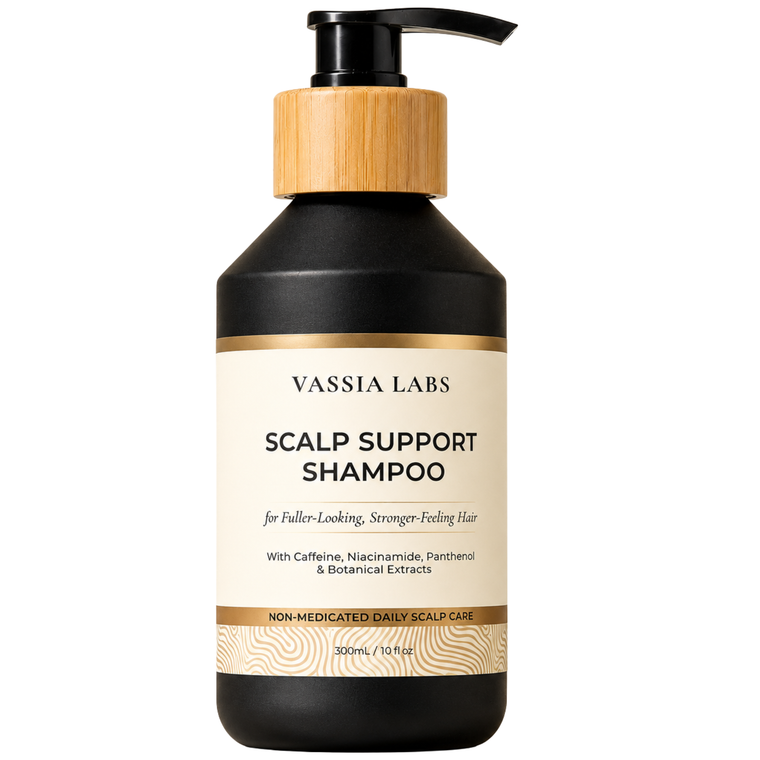
Vassia Labs Volumizing Shampoo for Fine, Flat & Thinning Hair is designed to sit between these two categories intelligently.
Its primary goal is lightweight volume: helping remove oil and everyday residue so fine roots feel cleaner and fuller.
At the same time, the formula includes panthenol and hydrolyzed wheat protein to support softer, stronger-feeling strands.
It is fragrance-free, sulfate-free and silicone-free, with caffeine, rosemary, niacinamide, ginseng, aloe, centella, hyaluronic acid, zinc PCA and additional scalp- and strand-support ingredients.
The intended result is straightforward: cleaner roots, more movement, stronger-feeling strands and fuller hair without a heavy coated finish.
Frequently asked questions
Is thickening shampoo better than volumizing shampoo for fine hair?
Not automatically. If your main issue is flat roots and oil, volumizing shampoo may be the better starting point. If your strands feel fragile or lack body, a balanced thickening approach may help.
Can I use volumizing shampoo every wash?
Many volumizing shampoos are designed for regular use. The right frequency depends on the formula, your scalp oiliness and how the hair feels after repeated use.
Can thickening shampoo permanently make hair thicker?
Cosmetic shampoo may make strands feel or appear more substantial temporarily, but it does not permanently increase biological strand diameter or follicle count.
What is best for fine hair that gets oily quickly?
Prioritize a shampoo that removes scalp oil and residue effectively without leaving a heavy film. Fine, oily hair often benefits more from lightweight cleansing than from rich conditioning at the roots.
Can one shampoo be both volumizing and strengthening?
Yes. A formula can focus on clean, lightweight roots while also using ingredients that support softness, manageability and stronger-feeling strands. That is exactly the balance Vassia is designed around.
Bottom line
For fine hair, start with the problem that is most visible. If roots are flat, remove weight first. If strands feel fragile, add support without burying them in residue.
For most fine, flat hair, we recommend starting with Vassia's lightweight volumizing approach because it also includes strand-support ingredients rather than forcing you to choose between volume and strength.
CATEGORY → PRODUCT COMPARISON → SHOP
Now compare the actual shampoos
This page owns the “volumizing vs thickening” decision. The next page compares real products so you can choose one.
Compare Vassia Labs, OUAI, Living Proof, Vegamour, Briogeo and Nioxin →