The “scalp T-zone” is an informal beauty term for the part line and temple areas, not a medical diagnosis. It can be a useful way to remember where scalp visibility and hairline changes are easy to compare over time, but a special T-zone routine cannot diagnose or reverse hair loss.
Why these areas attract attention
| Area | Why change can look obvious | What can affect appearance |
|---|---|---|
| Part line | Scalp is naturally exposed between sections of hair | Lighting, oil, flat roots, styling direction and true density change |
| Temples | Hair is often finer and the hairline creates strong contrast with skin | Tight styling, breakage, natural hairline shape and some forms of hair loss |
The part line: compare consistently
A part can look wider when roots are oily, hair is wet or flat, or lighting is harsher. A persistent progressive change deserves more attention. If this is your main concern, read Why Is My Hair Part Getting Wider?.
The temples: reduce avoidable tension
Repeated pulling from tight ponytails, braids, extensions or other high-tension styles can contribute to traction-related hair loss. Styles that hurt are too tight. See Tight Hairstyles and Traction Alopecia.
Gentle cosmetic care
- Cleanse according to oil, sweat, residue and scalp comfort.
- Use a shampoo that cleans effectively without leaving the roots coated.
- Detangle gently, starting at the ends and working upward.
- Reduce repeated tension around the temples.
- Use sensible heat and heat protection when styling.
There is no requirement that everyone with a sensitive hairline use a sulfate-free cleanser. “Sulfate-free” is a formulation choice, not a medical definition of gentleness. The complete formula and your own tolerance matter more.
What to track
If you want to monitor a part line or temples, take occasional photos in the same location, lighting, hairstyle and state of cleanliness. Comparing random bathroom photos taken under different conditions can create dramatic-looking differences that are not true density changes.
Commercial bridge: support appearance without pretending to treat the cause
If the issue is mainly flat roots and visible scalp after washing, use the Flat Hair & Root Volume Guide. If you are seeing ongoing density or breakage changes, use the Thinning-Looking & Fragile Hair Guide.
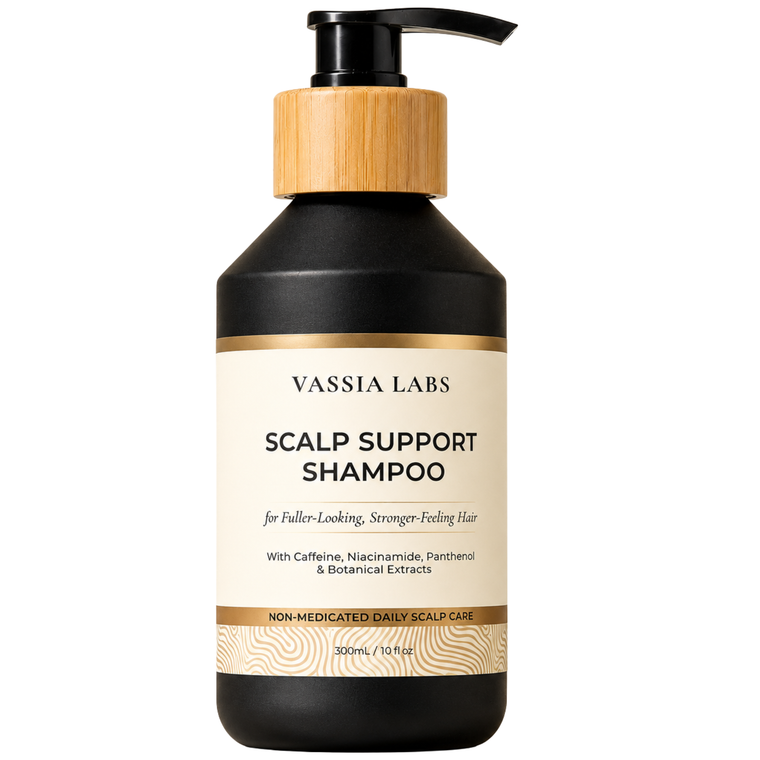
Vassia Labs Scalp Support Shampoo is a fragrance-free, sulfate-free and silicone-free cosmetic cleanser for fine, flat and thinning-looking hair. It can help remove oil and residue and support a lighter root feel; it does not treat the medical cause of a widening part or temple loss.
When to get professional help
Arrange medical evaluation for sudden or patchy loss, scalp pain or scarring, persistent significant shedding, or a progressive change in the part line or hairline.
Frequently asked questions
Is “scalp T-zone” a medical term?
No. It is informal beauty language for the part and temples.
Can special shampoo reverse thinning in the T-zone?
No shampoo should be assumed to reverse thinning. Cosmetic cleansing can change oil, residue and the appearance of existing hair, but it cannot diagnose or treat the underlying cause.