A useful scalp-care routine for thinning-looking, shedding or flat hair is usually simple: cleanse according to oil and buildup, keep heavy products off fine roots, condition where the lengths need it, reduce avoidable breakage and do not use shampoo as a substitute for diagnosing true hair loss.
Start by identifying the actual problem
| What you notice | First thing to check | Useful cosmetic step | When to seek help |
|---|---|---|---|
| Flat or oily roots | Wash frequency, conditioner placement, dry shampoo and styling residue | Cleanse the scalp thoroughly and keep rich products off the roots | If pain, sores or persistent inflammation are present |
| More loose hairs on wash day | Whether washes were spaced further apart and whether shedding is truly increasing over time | Wash gently and track the pattern rather than counting one shower | If shedding is sudden, heavy or persistent |
| Short broken hairs or rough ends | Heat, bleach, tight styles, friction and detangling | Condition lengths and reduce mechanical stress | If there are smooth bald areas or scalp symptoms |
| Widening part or smaller ponytail | Compare consistent photos over time | Use volume-focused care for appearance only | Arrange dermatology evaluation if the change is progressive |
1. Wash according to your scalp, not a viral schedule
The American Academy of Dermatology recommends washing according to how quickly hair becomes oily or dirty. Fine, straight or oily hair may need more frequent washing than dry, curly or tightly coiled hair. See the AAD’s healthy hair-care guidance.
Oil, sweat, dry shampoo and styling residue can collapse fine roots. Waiting longer is not automatically healthier if the scalp is uncomfortable or coated.
2. Put shampoo where the oil and residue are
Concentrate shampoo on the scalp and roots rather than aggressively scrubbing the entire length. Massage with fingertips, rinse thoroughly and repeat only when the first cleanse genuinely fails to remove heavy oil or product buildup.
3. Condition for slip without burying the roots
Fine hair still benefits from conditioning because tangles and friction can contribute to breakage. Apply conditioner mainly through the mid-lengths and ends when root volume is a concern, then rinse well.
4. Reduce avoidable breakage
- Blot wet hair instead of rubbing it aggressively.
- Detangle from the ends upward.
- Use lower heat when possible.
- Avoid repeatedly pulling fragile hair into tight styles.
- Introduce one new scalp product at a time so irritation is easier to identify.
5. Treat dry shampoo as a styling aid, not cleansing
Dry shampoo can temporarily absorb oil, but it does not remove dirt and residue. The AAD recommends continuing to wash with shampoo and water. If dry shampoo is being layered repeatedly, read Does Dry Shampoo Cause Scalp Build-Up or Irritation?.
6. Use clarifying or chelating products only when the problem calls for them
A clarifying shampoo can help with stubborn styling residue. A chelating formula is aimed at mineral or metal deposits. Neither needs to be used on an arbitrary calendar. See How Often Should You Use Clarifying Shampoo?.
7. Know what shampoo cannot do
Hair shedding and progressive thinning can be associated with genetics, hormonal changes, illness, stress, rapid weight loss, medications and other medical causes. Shampoo can improve cleansing, manageability and the appearance of existing strands, but it cannot determine why a follicle is changing.
The AAD explains that excessive shedding and hair loss are not the same thing. See its hair shedding guidance.
When to see a dermatologist
Seek professional assessment for sudden heavy shedding, smooth or expanding bald areas, scalp pain or scarring, eyebrow loss, a progressively widening part, a clearly thinner ponytail or hair changes accompanied by other symptoms.
Commercial bridge: build the routine around your main concern
For fine hair that becomes oily or flat, start with the Complete Guide to Fine Hair. If the main concern is root lift, use the Flat Hair & Root Volume Guide. If you are tracking breakage, shedding or visible density changes, use the Thinning-Looking & Fragile Hair Guide.
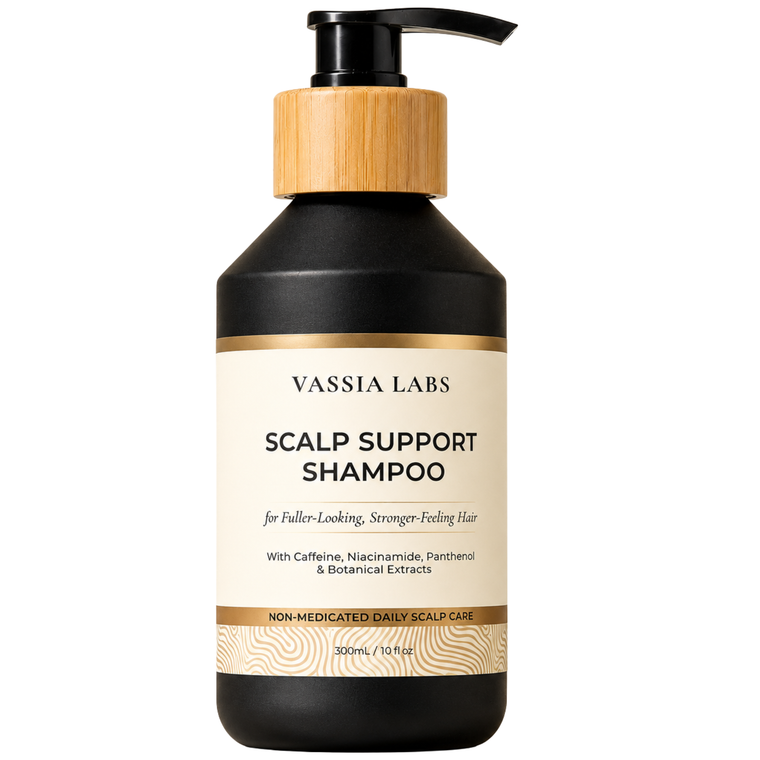
Vassia Labs Scalp Support Shampoo is a fragrance-free, sulfate-free and silicone-free cosmetic cleanser for fine, flat and thinning-looking hair. It is designed to remove everyday oil and residue while keeping the routine lightweight. It is not a treatment for medical hair loss.
Frequently asked questions
How often should I wash fine or thinning-looking hair?
Wash according to oil, dirt, sweat, styling residue and scalp comfort rather than following a universal schedule.
Can shampoo cause hair loss?
Normal washing releases hairs that were already ready to shed. Harsh handling can contribute to breakage, but persistent hair loss has other causes that may need evaluation.
Can shampoo regrow thinning hair?
A cosmetic shampoo should not be relied upon to regrow hair or treat the underlying cause of hair loss.